Kullu Valley
- First posted
- 31 August 2026
- Field report
- Version 2.22, draft
- Author
- Éloïse
Cite as Éloïse (2026). Kullu Valley. Zomia Collective. ZomiaFR HIMA01/kullu-valley. Version 2.22.
1. Introduction
I went to Himachal Pradesh, in northern India, in 2022 to collect seed from the local landrace cannabis populations. I planned to start in the Kullu Valley and walk over the mountains into the Parvati Valley. This report covers the first week of September 2022, which I spent in three villages above Naggar: Rumsu, Pulag and Hallan. I came back with ten seed collections: four from Rumsu, four from Pulag and two from Hallan. It was the start of three months in Himachal.
In this report I follow the definition of a landrace by Casañas and his colleagues. A landrace is a cultivated variety that has evolved, and may go on evolving, within a defined area and under the influence of the local human culture. It may be grown in old ways or new ones. It may be selected by farmers or by breeders, with traditional or modern techniques.1 The word does not necessarily mean the population is pure or unchanged. Landraces are always evolving under natural selection and under the selection of the people who grow them. In some cases they may also mix with other landraces and varieties.1 Section 3.5 sets out how I decide whether a collection is a landrace.
2. Area
The Kullu Valley is the valley of the Beas river in Himachal Pradesh, in northern India. It runs about 90 km from Larji in the south to the Rohtang Pass in the north.2 Rumsu, Pulag and Hallan are on the east side of the valley, above the town of Naggar. In the 2011 census all three are in Kullu tehsil, one of the district’s revenue subdivisions. They are also in the Naggar development block.3 The census counted 1,010 people in 226 households at Rumsu, 208 people in 43 households at Pulag and 524 people in 112 households at Hallan, which the census calls Hallan-I.4 People here speak Kullui, the local language, and Hindi.
The three villages are in a side valley, along a stream that runs west to join the Beas near Naggar. OpenStreetMap names the stream the Chakki Nal. In 1931 V. Shibayeff wrote about the Urusvati Himalayan Research Institute at Naggar. He wrote that the northern slope of the ridge the institute stands on descends “to Chhaki River, a side-stream of the Beas”.5 Rumsu and Pulag are on the south side of the stream, on slopes facing north. Hallan is on the north side, facing them. The villages are between 2,050 and 2,275 metres. The fields above them go up to about 2,400 metres.
The nearest long weather records come from Naggar, Katrain and Manali. Over 27 years of records, Naggar’s average rainfall was 49.4 inches a year, about 1,250 mm.5 Lower in the valley, two agricultural research stations averaged 918 mm of rain a year at Bajaura (1,090 m) and 1,124 mm at Katrain (1,550 m). July is the wettest month. November is the driest. January nights at Katrain fall to between -2 and -5 °C.6 Manali, at about the same height as Rumsu, gets around 1,400 mm of rain a year. July and August are the wettest months. Winter nights there drop just below freezing. Summer days reach the mid twenties.7 The monsoon usually reaches Himachal in late June. It leaves in late September, so my visit came at the end of it.8: 29
I did not sample the soil. SoilGrids is a global soil map that ISRIC makes from soil samples and computer modelling.9 It predicts loam to clay loam soils at the villages, moderately acid, at around pH 5.8.10 A 2019 study of apple orchards in Kullu district tested the soil at Naggar (1,880 m) and Arsu (2,080 m). It found pH 5.8 to 6.9, depending on how each orchard was managed.11: 152
The Kullu Valley has grown apples for longer than anywhere else in Himachal. The first orchard was Captain R. C. Lee’s, at Bandrol in Kullu tehsil. The British had brought apples to the valley by 1865. Coloured apple varieties reached the Shimla hills in 1917.12: 106–107 Between the early 1990s and 2017 the area under apples in Kullu district grew from about 15,000 to about 26,000 hectares. Production rose by about the same share. The yield per hectare stayed at a little over four tonnes.12: 109–110
Apple trees need a spell of winter cold to fruit well. The winters here are getting warmer. A 2015 study found that at Bajaura, in the lower valley, the average daily maximum temperature rose by 1.2 °C from 1985 to 2009, while the winter chill fell. In 2009 and 2010 the researchers also asked 30 apple growers at Bajaura and nearby what had changed. Of those, 27 per cent wanted to move their orchards higher up the slope. Nearly half, 43 per cent, had stopped planting apples.13: 14, 17, 19 Across Himachal the orchards have moved uphill, from 1,200 to 1,500 metres in the early 1980s to 1,500 to 2,500 metres in the 2000s.14: 2 In the Kullu Valley the apple belt has shifted about 30 km north, from Bajaura to Raisan.6 Cannabis growing has moved uphill too (section 5).
From Naggar you look down on a valley floor of orchards and vegetable gardens, with hotels and dhabas (roadside restaurants) going up among them. Much of the development is taking place in Manali, but it is happening all along the valley. People have always lived high on the mountainsides. Now they want to be on the valley floor, near the work, the services and the tourist money. Some are building on land taken back from the riverbed.
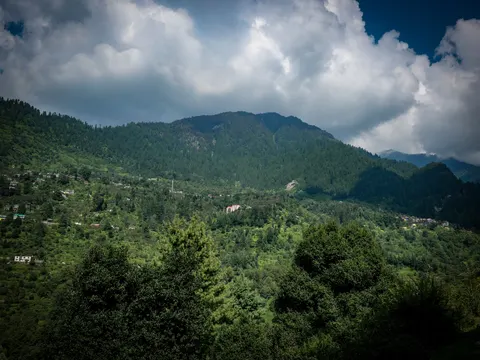
Chanderkhani is a pass on the ridge above Rumsu. The path over it leads down to the village of Malana on the other side. Before there was a road to Malana, it was the old way in from the Kullu side. I had heard about it earlier in my travels. People talked about how hard the climb was. They also talked about how incredible it was to come down the steep far side into Malana, to be greeted by charas smokers and cannabis fields. Charas is the hashish made by rubbing the resin off the flowers by hand. The route is an old one. Captain A. F. P. Harcourt, a British officer who was Assistant Commissioner of Kullu from 1869, described it in his 1871 book, The Himalayan Districts of Kooloo, Lahoul, and Spiti. His route starts at Manikaran in the Parvati Valley. It follows the Parvati to a village he calls Chulaul, probably today’s Chhalal, then climbs over the Kundee Pass to Malana. From Malana it crosses what he calls the Malauna Pass, coming down at Naggar in the Beas Valley.15: 64 His Malauna Pass is the Chanderkhani route, the one I walked in 2023.
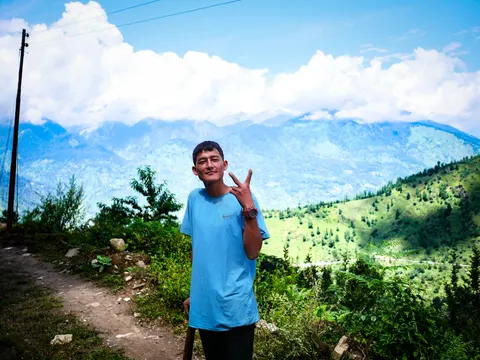
2.1 Cannabis in the Kullu Valley
British officials wrote about cannabis in Kullu in the late nineteenth century. They called it hemp. J. B. Lyall was the British officer who assessed the land of Kangra district for tax between 1865 and 1872, when Kullu was part of that district. He wrote that hemp there was grown for its fibre.16 The government gazetteer of Kullu, Lahaul and Spiti was the work of A. H. Diack, who assessed the land of Kullu from 1887 to 1890. It says hemp was grown only for its fibre. It was not taxed.17 The government of British India set up the Indian Hemp Drugs Commission to inquire into cannabis. In 1894 it reported that hemp in Kullu was grown mainly for fibre, in small scattered patches. Charas was not a regular by-product of the crop in Kullu, though it was in Garhwal further east.18 Alexander Anderson had been Assistant Commissioner of Kullu. In his written evidence to the Commission he said that hemp grew abundantly there, with a patch near almost every house. A report he wrote in 1880 is printed with his evidence. It says that real charas could not be made from the hemp of Kullu. A man could make only enough for two smokes in a day.19
The five older men I spoke with at Rumsu (section 3.2) had learned to grow cannabis and rub charas from their elders. They had started young. They had watched the valley change. They told me that before the Italians came, people here rubbed only the jungli plants, meaning the wild and feral ones. Nobody made cream, the better grade of charas, which is rubbed lightly and slowly. The Italians were the first to teach them to rub cream. The men disagreed about whether that was in the 1970s or the 1980s. When they were young there were few tourists. There was nowhere near as much cannabis growing as there is now. A tola of charas, about 10 grams, sold for 15 rupees or less.
By their account, cannabis growing on today’s scale dates from the hippy trail, the overland route that brought young Western travellers to India. It dates especially from the Italians of the 1980s and 1990s. The men said the fields grew bigger year after year. Foreigners coming to buy charas were what pushed people to grow more. The fields were at their biggest in the good years before the Malana dam and its road were built. Tek Chand, a grandfather of 63 at Rumsu, remembered when tourists regularly walked over the Chanderkhani Pass.
The dam the men meant is the Malana hydroelectric project, in the valley on the far side of the ridge. It was built between January 1999 and July 2001.20 A 9 km access road was built up the mountain for it.21
Today there are many tourists. Cannabis grows all over the valley. The area is famous for it. According to the locals I spoke with, a large proportion of families in these three villages grow cannabis and make charas. Most of the charas made here is business, cream or super cream. Business is the cheaper grade, rubbed harder and faster than cream. Super cream is the top grade. Section 7 describes how they are made.
3. Method
3.1 Itinerary
The first stage of the walk I planned was the Chanderkhani Pass, from Rumsu over the ridge to Malana. From Malana I meant to cross the Rasol Pass, then go on to Gohar, Manikaran, Tosh and Kheerganga.
I took the train from Delhi to Chandigarh on 30 August 2022. I spent the night at Daria, just outside Chandigarh. On the 31st I took the bus to Manali. On 1 September I took a local bus back down the valley to Naggar, then walked up to Rumsu. I stayed there at a homestay.
I spent the first three days walking the terraces and paths around Rumsu, collecting seed. On 4 September I visited Pulag and Hallan in one afternoon. On the 5th I walked up to the cannabis fields on the slope above Rumsu, then on to the fields above Pulag. On the 6th I went back to the house of a farmer I had met the day before, to collect seed he had set aside for me. Then I got a lift down to Kullu. From there I took a tuk tuk on to Kasol.
I did not cross Chanderkhani that year. Organising it was a hassle. A guide was expensive. The people I asked in Rumsu did not want me to go alone, because they did not think I had the right gear or the right shoes. I now think they were right: when I crossed the pass a year later, in September 2023, with my friends Piano and Josh, it was far more intense than I had expected.
3.2 People
During my stay I spoke to a few dozen people, aged from 22 to over 70, all living in Rumsu, Pulag or Hallan. In Rumsu I tried to interview nine people informally. Seven were Kullui, one was from a Malana family and one was Nepali. The interviews were in English, with some of my broken Hindi. I asked about Kullui too. I picked up a few phrases and learned how to count. Seven people answered my questions, in three interviews. The other two agreed to talk but would not answer the questions on cultivation, saying they knew nothing about it.
The interview questions were:
- How long has cannabis grown here?
- Who grows cannabis?
- Describe the cultivation of cannabis.
- Have there been any changes to the way cannabis is cultivated?
- Has the plant changed?
- Has the weather changed?
- When do you plant the seeds?
- How do you do it?
- Where do the seeds come from?
- Have you ever gotten seeds from anywhere else?
Roshan Thakur, 37, owned the homestay where I stayed. Tek Chand, the man I learned the most from, was a grandfather of 63 who had rubbed charas since he was a small child. His eldest son grows apples and rubs charas too. Tek Chand had worked for many years in a city before retiring home to Rumsu. I met him in a field above the village on 5 September. The same day, on the way up to the fields, I smoked a chillum with five men of about 45 to 65 at a viewpoint. A chillum is the clay pipe used for charas. The men told me they were rubbing. They showed me their hands and asked if I wanted to buy some charas. One of them was from Pulag. The other four were from Rumsu, and one of those had married into Rumsu from Hallan. Those seven answered the questions.
The two who did not answer the questions on cultivation were Raja and Roshan Thakur’s wife. Raja, the cook and houseboy at the homestay, was 22, from the Kathmandu Valley in Nepal, in his second season there. Roshan Thakur’s wife was a housewife of 33, from a Malana family. Beyond the interview questions, all the participants were happy to talk about their experiences with cannabis and their own lives. At Pulag and Hallan I hardly spoke more than a few words to the people who gave me seeds. Names in this report are changed.
3.3 Seed
Every time I asked for seed, people were confused until I made it clear that I had come for the seed first and the charas second. Nobody asked what I wanted it for. I told them anyway. The seed would be stored and shared with people who want to grow the local plants or study them. Some would be kept for the future. Some would be sold to pay for more collecting.
Seed is worth very little here. One man showed me with big gestures how worthless it is. “We don’t sell seeds,” he said. “Seeds are too much. We have too much seed.” Roshan Thakur said the going rate was 500 rupees a kilo, the price charged by a woman in Patlikuhal who sells seed by the sack. She was the only seller anyone mentioned. I paid much more than that. People would not take money for seed. Nobody refused it outright. When I paid for seed, they would give me charas in return, worth about what I had paid. So my money bought charas. The seed came with it. Tolas of charas are not cheap. The seven I bought in the valley came to 19,000 rupees.
I made four kinds of seed collection. A general population collection is a bag of seed that a farmer gave me from their own crop. A ‘Village’ collection is seed from the small tended patches near the village. I picked it myself in all three villages. An ‘Upper’ collection is seed from plants I chose and rubbed in the cannabis fields above a village. A feral collection is seed I picked from the volunteer and feral plants, which come up without anyone sowing them, on the terraces below the fields. Nobody gave me a local name for any of these places, so ‘Village’ and ‘Upper’ are my own labels. Everywhere else on the trip the field names came from the farmers.
At Rumsu the general population seed came from Tek Chand. I asked him to set some aside for me. It was ready when I went back to his house on 6 September. His wife, or a woman of his family, handed it over. She would not take money for it. Roshan Thakur had called ahead to Pulag and Hallan to ask for seed from local plants. At Pulag the general population seed was given to me by people I hardly spoke to. At Hallan it came from Roshan Thakur’s friends, to whom he introduced me.
I picked seed by hand, a few seeds at a time, on 1, 2 and 3 September. There is always a little seed to pick up. Larger amounts come once people start rubbing. At Rumsu that had only just begun in the higher fields. For the Rumsu ‘Village’ seed I chose the plants that stood out on every count: size, resin and smell. In the first days of September only some of them had ripe seed. I started by keeping the seed of each plant separate. By the end of a walk I could no longer tell one from another, so I grouped the seed by the ground it came from. At Pulag and Hallan I picked the ‘Village’ seed quickly, from a few plants, on the afternoon of 4 September. I chose the ‘Upper’ plants by their resin, which is how rubbers choose the plants they rub. I picked both ‘Upper’ collections on 5 September, in the fields above Rumsu and Pulag. I kept the upper seed separate because the crop in the hidden fields was denser, more productive and in better condition than anything on the terraces. All of the seed came from plants grown in Rumsu, Pulag and Hallan.
3.4 Seed handling and storage
The seed came to me in two states. Three collections were given to me by farmers. They are the general population seed from all three villages. That seed was from the year before. It was fully ripe and already dry, so it needed no drying. The other seven I collected myself in the first week of September. They are the three ‘Village’ collections, the two ‘Upper’ collections and the two feral ones. That seed was fresh from the plants.
I spread the fresh seed out on a plate, with space between the seeds. I left the plate overnight in a well-ventilated place. By the next morning the husks and other bits of plant around the seed had dried. I cleaned them off. Then I laid each collection out on its own piece of cloth, with a small handmade label giving the collection’s name. The seeds were spaced out so that each could dry. After 48 hours on the cloth, the seed looked dry enough by my standards to store without going mouldy.
Both kinds of seed went into zip-lock bags, one bag for each collection. I wrote the place and the collection’s name on each bag. I kept the bags with me while I travelled, because I had no base yet. Later in the trip I made my base at Grahan, a village above Kasol in the Parvati Valley. From then on the seed stayed at Ravi’s place until November 2022. Ravi was the first person I met in Grahan. He became a close friend. The seed was in France by the middle of December 2022.
The seed is still kept in France today. There is plenty of it left. It was tested for germination there. For each of the eight landrace collections 100 seeds were germinated, and on average about 85 per cent of them sprouted. The feral seed did much worse. Twenty seeds from each of the two feral collections were tested, and on average about 20 per cent sprouted.
3.5 Classification
I classify each collection by Zomia’s classification method, version 1.1. It sets out the tests for three things: the collection’s class, whether it is autochthonous and whether other varieties have been crossed into it. The table below gives my evidence for each test. It also says whether that evidence is something I saw, something I was told or something I read.
| Test | Evidence | Kind | Result |
|---|---|---|---|
| Sown and tended | Cultivated fields above the villages. Small patches by the houses that looked tended, though I could not be sure they were sown. | Seen | Met |
| Evolved in the area | Everyone I asked at Rumsu saves their own seed each year. Nobody grows plants from cuttings. | Told | Met |
| Shaped by local people | They keep seed from the plants they rub for charas. Tek Chand rubbed with a tarpaulin under him. He told me the seed is collected that way, caught on the tarp during rubbing (section 7). | Seen, told | Met |
| Fifty years or more | British records of hemp in Kullu from the 1870s and 1890s (section 2.1). The older men at Rumsu learned to grow it from their elders. | Read, told | Met |
| Introgression | Everyone I asked at Rumsu said no seed had come from elsewhere. Roshan Thakur said seed from Amsterdam had been tried in Malana, Rasol and Tosh. He said it did badly there, growing stunted and “dry”. I saw one type of plant varying within a range, and no broad-leaved hybrids. | Told, seen | Reported nearby |
I asked about Pulag and Hallan mostly at Rumsu, and I treat the three villages as one area. Families in them marry into one another and share land. People from Rumsu farm fields at Pulag. Roshan Thakur and Tek Chand told me the three villages grow one plant, which looks different from place to place with the microclimate. The older men, Roshan and Tek Chand all said their parents and grandparents grew it. Roshan told me his friends at Hallan had kept their seed “forever”, all of it saved during rubbing. On the way to Pulag he told me the seed there would be local and good, because the men giving it were excellent rubbers.
Eight accessions are thus classified as autochthonous landrace accessions. Introgression is reported nearby but not in this population.
Two accessions are classified as feral accessions. I told the feral plants apart by several signs. They grew away from the fields and the tended patches, on the terraces, field edges and verges. More of them had ripe seed. Their seeds were tiny and shattered easily. The plants were more spindly, with longer gaps between the nodes. Their flowers were sparser and looser, sometimes no more than single bracts. Their leaflets were thinner than those of the field plants (section 6).
4. Sites
| Site | Elevation | Slope faces | What grows there |
|---|---|---|---|
| Rumsu, village | 2,050 m | north-west to north-east | volunteer and feral plants on the apple terraces, small tended patches beside the houses |
| Rumsu, upper fields | 2,250 m | north to north-east | small cultivated fields hidden above the village |
| Pulag, village | 2,200 m | north to north-east | small patches and stands on both sides of the stream, feral plants on the terraces |
| Pulag, upper fields | about 2,400 m | north to north-east | cultivated fields on the path to the pass |
| Hallan | 2,275 m | south-west | smaller patches all around the village, fields high above it |
4.1 Rumsu
Rumsu is on the south side of the side valley, on a slope facing north. The old village is up on a ridge above the road. Newer houses have been built down along the road, where online maps put Rumsu. Apples are the main crop, on terraces that run all round the village. Volunteer and feral cannabis plants come up scattered among the trees and along field edges, roadsides and verges. Nobody tends them. Close to the houses are small patches that somebody looks after, sown and worked at least some of the time, though it is hard to tell. Their plants are much closer to the field plants than to the feral ones. That is where I took the ‘Village’ seed.
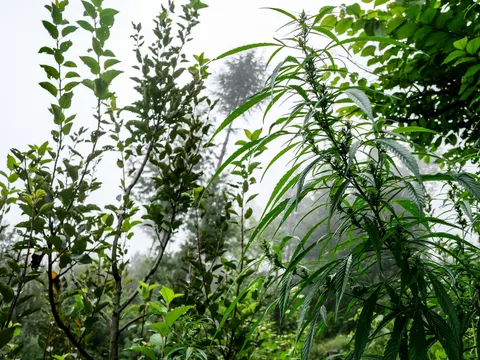
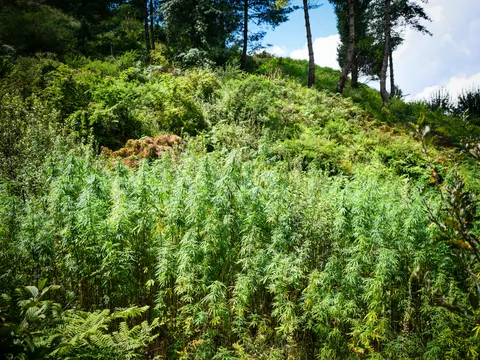
The cannabis fields are above the village, on the path that climbs toward Pulag and the Chanderkhani Pass. They are about 700 m south-east of the village, 200 m higher up. They are small, well kept and hidden from anyone walking on the paths below. For someone local they are ten to thirty minutes’ walk from the village. It took me longer (figures 4 and 5). I think the fields are kept hidden because Rumsu is in the main Kullu Valley, where it is easy to reach. The road is part of that.
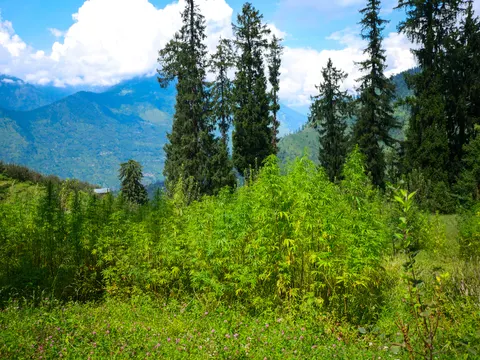
4.2 Pulag
Pulag is further into the side valley, on the same side of the stream as Rumsu. On 5 September I walked up to its upper fields on the path that climbs from Rumsu toward the Chanderkhani Pass. In the 2011 census Pulag had no all-weather road.3 At Pulag cannabis grows on both sides of the stream all the way up toward Chanderkhani, mostly in small patches and stands. Larger fields may be hidden higher up. The upper fields are about 200 m above the village, south-south-east of it on the path to the pass. They are the highest cultivation I saw in the Kullu Valley.
I went to Pulag on the afternoon of 4 September with Roshan Thakur, the owner of the homestay where I stayed. We went by car, parked outside the village and walked in by the path. It was drizzling. On the way in I picked the ‘Village’ seed myself, quickly, from a few plants. I could not photograph them in the rain. I was told the police were in the village that afternoon, cutting down cannabis. Roshan was worried. He kept hurrying me along, trying not to draw attention. I came away with two tolas of charas, a cream for 3,000 rupees and a super cream for 4,500. I was given seed too, then we left. I hardly spoke to the people who gave it to me. I also wanted seed from the feral plants around the village. I had to talk Roshan into letting me stop to pick it by hand. I photographed far fewer plants at Pulag than at Rumsu.
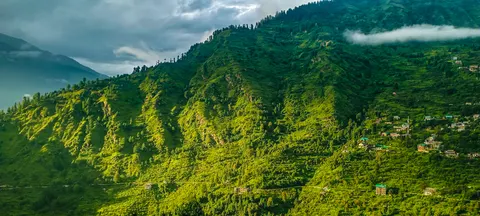
4.3 Hallan
Hallan is on the north side of the stream, facing Rumsu across the side valley. Below the village the valley narrows into a gorge, so there is no way further down on that side. Roshan Thakur and I drove there on the afternoon of 4 September, after Pulag, and again walked in from where we parked. On the way in I picked the ‘Village’ seed myself, quickly, from a few plants. Roshan introduced me to friends of his in the village, who gave me seed. I came away with two tolas of charas, a business for 2,000 rupees and a cream for 3,000. Cannabis grows in smaller patches all around the village. Hallan also has fields high above it, which I was told about but did not visit, so I have no seed from them. I have since found them on a map. It was raining, and I took no photographs at Hallan.
5. Cultivation
Tek Chand and Roshan Thakur both told me the seed is sown after the snow melts. At the height of the villages that is late March. Higher up it is later. The Manali climate records fit this: nights there are below freezing on average in January and February, then warm up from March.7 I arrived at the start of the rubbing season, in the first days of September, in the last weeks of the monsoon. Tek Chand told me the harvest ends at the end of December. That is also when the snow reaches the lower ground.
The seed is scattered by hand over dug ground. Nobody raises seedlings to plant out. A field gets one or two visits during the year, more from some farmers. Otherwise it is left to the rain. Some of the male plants are pulled out once they can be told from the females at a glance, but nobody puts much effort into it. Apart from that, the only culling is done by the police. In the upper fields cannabis grows on its own, in patches that meet the apple terraces only at their edges. Cultivation has moved uphill over the years, so the fields that count as the upper fields now are higher than they used to be.
6. Plants
The plants here are dioecious, meaning each plant is either male or female. I did not see any hermaphrodites, plants carrying flowers of both sexes. In the fields I estimated by eye that about one plant in ten was male. Among the volunteer and feral plants it was closer to half.
I made rough notes on the plants at the time. For this report I went back over them with the photographs I took in the fields above Rumsu on 5 September, and wrote the description below from those photographs. The plants in them were one and a half to three metres tall. They were columnar: one main stem grew faster than the side branches, which got shorter toward the top. Not every plant I saw in the valley was that tall and narrow. Each leaf had seven to nine leaflets of medium width, with shallow teeth along the edges. The flowers grew in loose spikes, small clusters spaced along the stem, tapering to a point. On 5 September the plants were in early flower. Most of the stigmas, the fine hairs on the female flowers, were green, because the plants were still immature. On a few riper plants they had turned reddish brown. There was some purple in the field plants, but not much when I was there. The leaflets of the volunteer and feral plants were thinner than those of the field plants. Even so, they were nowhere near as thin as the leaflets of the feral cannabis on the plains of Punjab. The red stems I saw were on the volunteer and feral plants. The plants at Pulag and Hallan looked the same as those at Rumsu.
Figure 7. The upper fields above Rumsu, 5 September 2022
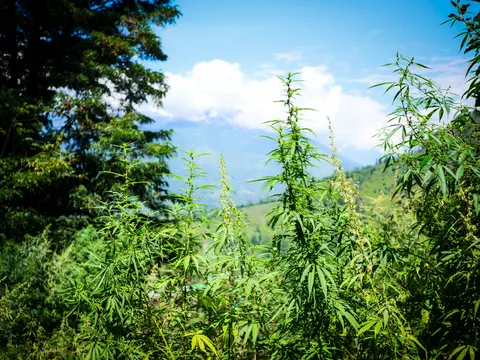
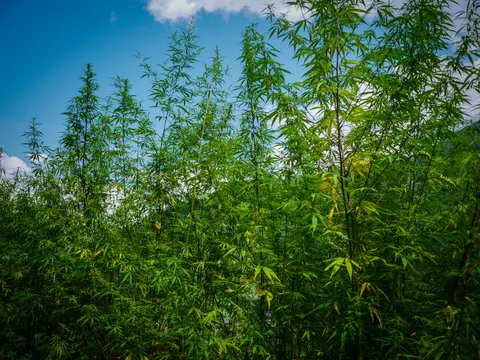
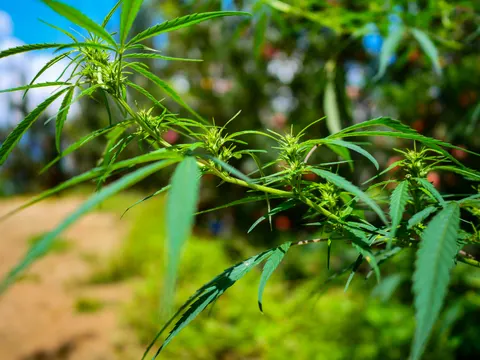
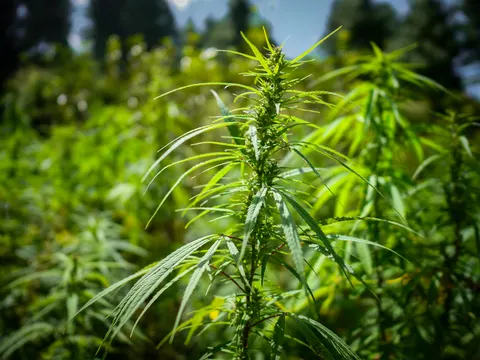
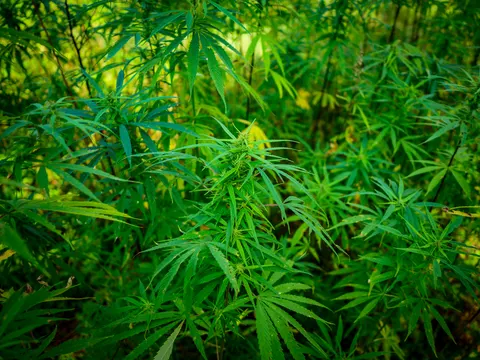
Many of the plants smelled of mango and carrot, with a faint coppery note underneath. The odd plant was stranger, closer to dairy. Some had a distinct gassy smell.
7. Processing, names and uses
7.1 Rubbing
Today cannabis in these villages is grown for charas. When I arrived in the first days of September the rubbing season was just starting. People in the higher fields had already begun. On 5 September Tek Chand showed me how to rub charas in one of the fields above Rumsu. It was the first day or two of rubbing that season. The rain was letting up. He picks the ripest plants. He judges them by the oil, his English word for the resin on the flowers. A plant thick with it has “too much oil”. He needs dry weather, a dry plant and the sun out. He cuts the plants carefully with a knife, carries them to one of the many good spots for the work, then sits down over a tarp. He rubs the flowers between his palms until the resin builds up on his hands. For cream, the better grade, he rubs lightly and slowly. For business, the cheaper grade, he rubs harder and faster. It takes a few hours at the least, often the whole day. He told me my rubbing was no good. We laughed about how much oil he got off a plant compared with how little I did.
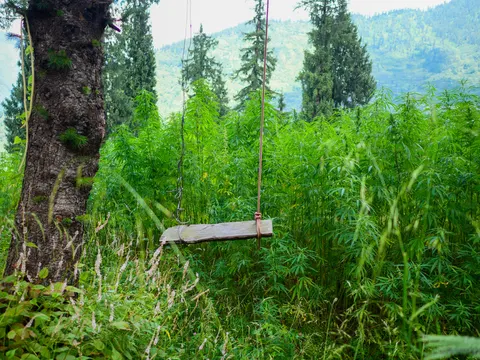
On the day I left, 6 September, the rain finally stopped. The villages below the Chanderkhani Pass were celebrating the first rubbing of the season. I was told the festival is called Bis Bahadur. On the road from Kullu up to Kasol that day, I saw people at the roadside rubbing the flowers of plants that were still standing. Nobody at Rumsu rubbed standing plants.
7.2 Charas
Because business is rubbed hard, it carries some plant matter with it. Cream is rubbed lightly, so it carries almost none. Tek Chand showed me how to tell them apart. You push a thumbnail into a piece and lift a small flake. Then you compare the colour inside with the colour of the surface, which shows how far the charas has oxidised. He also taught me that super cream, the top grade, is slightly less black than cream. In the right conditions it can be polished until it shines like glass. Stored well, it forms an almost clear, glassy shell. Charas is sold by the tola. The old standard tola is a little under 12 grams. In practice a tola of charas is nearer 10 grams. You hardly ever get the full weight.
Charas smells completely different from the living plant. Cream, business and the charas rubbed from wild plants all smell different from each other too. The business I smoked was the tola I got through Raja, a year old. It was dark and dry, reddish brown inside. It smelled hashy, piney and earthy. It was smooth to smoke, though the smoke coming off the burning end was acrid. The cream came from Roshan Thakur. It was also a year old. He said it came from the upper fields. It was stickier, lighter brown inside, with a snap when pulled apart. It was still piney but more like chocolate, with a delicate floral note that came off the burning end like incense. The business came on gradually. It lasted a long time, a high in both body and mind, which left me sleepy and easy. The cream was the same but stronger, with a high in the head on top. What I rubbed myself was fresh cream: strongly aromatic, sticky and full of water. There was barely enough for one joint. I judged them only by smoking them. Nothing was tested in a laboratory.
7.3 Other uses
Roshan Thakur’s wife told me that cannabis seed is made into a chutney. The seed is crushed with water and spices. It is eaten with all sorts of food, including siddu, a steamed wheat bread.
Written sources record other uses in Kullu district. Cannabis is one of the herbs in dhehli, the starter used to ferment sura, a drink made mostly in the Lug Valley.22: 330 A 2023 survey of plants used in religious practice in the Kullu, Manali and Bhuntar tehsils records cannabis in ghota, a preparation made for the festival of Shivratri. The survey calls the plant bhang or bhong.23: 7 A 2014 survey of traditional fibre plants in Kullu district found that about nine in ten of the people asked used cannabis for fibre. The stems are soaked, then beaten to free the fibre, which is made into shoes called pula.24: 190–191
7.4 Names
People called the plant ganja. That is the word I heard most. Maal, which means goods in Hindi and Urdu, is the trade word. It is used for both the plant and the charas. People at Rumsu also told me their Kullui word for the plant, bhang. The volunteer and feral plants were jungli bhang, wild bhang. Tek Chand’s English word for the resin was oil. Two written sources record the same name. Walter Koelz, an American naturalist who worked from the Urusvati Institute at Naggar, collected a cannabis specimen at Keshapur, beside a road at about 1,000 feet, in 1931. On its label the common name is “Bang”, in the Kulu dialect.25 The 2023 survey of plants used in religious practice spells it bhang or bhong.23: 7
8. Trade and enforcement
8.1 Buyers and prices
Charas is sold wherever a buyer turns up: in the fields, at people’s houses or around the villages. Larger buyers, whom Roshan Thakur called “the mafia”, come for big consignments. They leave quickly. Tek Chand and Roshan Thakur told me a lot of the charas is exported abroad. More than one person told me where the cream goes: Europe, Israel, New Delhi and the travellers in Goa and Pushkar. Buyers from Punjab come up for it too. Tourists are charged more than other buyers.
Prices in 2022 ran from 1,500 to 5,000 rupees a tola, with cream at the top of the range. I bought seven tolas in the valley: one through Raja at the homestay, two from Tek Chand, two at Pulag, two at Hallan. They came to 19,000 rupees. At Pulag I was also offered a second piece of super cream at 5,000 rupees a tola. I did not buy it. It did not look like super cream to me. My budget was small too. Roshan Thakur gave me half a tola of cream. He would not take anything for it. The first table sets out every price I paid, was offered or was told about in 2022. The second gives prices from earlier years.
| Item | Amount | Price (rupees) | Place | Age | Source |
|---|---|---|---|---|---|
| Business | 1 tola | 2,000 | Rumsu | 1 year | Bought through Raja |
| Business | 1 tola | 1,500 | Rumsu | Fresh | Bought from Tek Chand |
| Cream | 1 tola | 3,000 | Rumsu | 1 year | Bought from Tek Chand |
| Cream | 1 tola | 3,000 | Pulag | 1 year | Bought |
| Super cream | 1 tola | 4,500 | Pulag | 1 year | Bought |
| Business | 1 tola | 2,000 | Hallan | 1 year | Bought |
| Cream | 1 tola | 3,000 | Hallan | 1 year | Bought |
| Cream | Half a tola | Free | Rumsu | 1 year | Gift from Roshan Thakur |
| Super cream | 1 tola | 5,000 | Pulag | 1 year | Offered, declined |
| Cream | 1 tola | Up to 5,000 | Kullu Valley | Offered, declined | |
| Seed | 1 kilo | 500 | Patlikuhal | Reported by Roshan Thakur |
| Item | Amount | Price (rupees) | Place | Period | Source |
|---|---|---|---|---|---|
| Charas | 1 tola | 15 or less | Rumsu | 1970s and 1980s | Reported by the five older men |
| Charas | 1 tola | 150 | Kullu and Parvati valleys | 1990s and 2000s | Reported by Roshan Thakur |
| Charas | 1 tola | About 250 | Goa | 1990s and 2000s | Reported by Roshan Thakur |
Buying in bulk costs less per tola. Good cream is hard to buy in any quantity, super cream even more so. Super cream has to be ordered in advance. Cream often does too. Business is much more profitable to make. Small buyers are usually tourists who turn up in the villages. Larger orders are put together across a village, because one person can only rub so much. Where charas is made in larger amounts, teams of Nepali workers are brought in to rub. Roshan Thakur told me that in 2022 this was happening in Pini, Rasol and Bareonah, in the Parvati Valley. It was not happening in Rumsu, Pulag or Hallan, where the police came too often for big teams. Tek Chand and Roshan Thakur told me some charas from Malana is carried over the Chanderkhani Pass, down to the main road in Kullu. People on the two sides of the pass are closely related. Many families have married across it. While I was there, people in Malana were sending their relatives in these villages photographs of their palms, covered in resin from the first rubbing of the season.
8.2 Making a living
Roshan Thakur explained to me how the men here make a living. Most of the families who grow cannabis are Thakurs, landowners. The valley used to be poor and remote. People farmed to feed themselves. Apples came in, then later charas. Both could be grown for cash. Roshan’s generation grew up with foreigners coming to visit and live in the valley. Children inherit all or part of the family land. That leaves them only so many ways to make money. Making charas to sell to tourists is a good way to make up for a small inheritance or none. It also pays for whatever else they want. But it only goes so far. From the 1990s through the 2000s the thing to do was to take their charas down to Goa, Pushkar or Paharganj in Delhi for the season, to sell it there for more. Young men met foreigners there. Sometimes the foreigners came to them in the mountains. They did “international business” with Italians, English, French and Israelis. Charas was very cheap then: 150 rupees a tola in the mountains, maybe 250 at the beach. This was very typical, he said, of Kullui men from the few villages in Kullu and Parvati who knew how to rub cream and get it to the right places.
As a man gets older and better established, he no longer has to sell to tourists himself. He can scale up, selling in bulk and abroad, which Roshan called mafia business. Or he can get a homestay, where parties and chillout sessions bring the tourists in. There he can sell charas safely. Either way, his luck in Goa, Delhi or Pushkar runs out in the end. He has to go home or go to jail. Not everyone is born into this life, Roshan said, but for those who are there are only so many paths. In the end a man settles down at his homestay. With age, god and tradition matter more. He stops smoking all day. He keeps away from tourists. He puts local produce and the ascetic religious life of Kullu first, doing traditional things all day. Many men go that way as they age, some further than others. I heard this last part from other people too.
Tek Chand left Himachal to earn money. He worked for many years at a decent job in a mid-sized city outside the state, while his family stayed in Rumsu. He told me how hard that had been. He had felt cut off from the mountains he came from. He has since retired home. He used to sell charas. He told me he no longer does it the way he used to. He rubs now because he enjoys it. It gives him charas to smoke with his friends through the rest of the year. He likes the ritual of it too.
Raja, the cook at the homestay, is from the Kathmandu Valley in Nepal. He came to Rumsu because people from his village had told him it was a good place to earn money. He said the work is hard but he likes it. He considers it a fairly comfortable job, relatively speaking, because he does not have to do anything back-breaking or illegal. He gets to ride Roshan’s Royal Enfield motorbike. He meets foreigners while he earns a wage. The first charas I bought came through him. When I asked him to find me some, he asked older Nepalis working in similar jobs nearby and the local people he knew. He got me a small piece of business from one of his Nepali friends. After that, Roshan Thakur supplied my charas. Both of them praised the local charas. Roshan wanted to go into business with me. He would buy the charas and handle the export. He showed me evidence of the business he already did abroad.
8.3 The law and the police
The Narcotic Drugs and Psychotropic Substances Act, India’s national drug law, came into force on 14 November 1985.26: 508 Prasenjeet Tribhuvan studied cannabis and social change in the Parvati Valley. He reports that in 2012 the office of the Superintendent of Police in Kullu recorded around 510 cases, 143 of them involving local residents.26: 510
I did not see the police myself. Roshan Thakur was the most guarded man I met at Rumsu. He talked about the police more than anyone. He said they come regularly. They take “tea money”, meaning bribes. He told me the fields above the village were dangerous or impossible to reach, so I should not try. It made me uneasy at the time. I could not tell how much of it to believe. At Pulag I was told the police were in the village that afternoon, cutting down plants. Roshan, who was with me, was worried. Afterwards I was glad I had not been caught in a field.
The five older men said everyone’s attention is on the Parvati Valley. Rumsu and Pulag are quicker to reach from Kullu and Bhuntar than anywhere inside the Parvati, though, so the police come here too. Every village that grows cannabis gets raided, they said, Pini often. I could not check any of this on one visit. I think how hard the police come down on a place depends on how much cannabis grows there, how close it is to the police, whether the people there can afford to pay them and the politics of the moment.
9. Change and conservation
The older men and Tek Chand told me the plant itself has changed. It used to be oilier, meaning more resinous. The older men also said it used to be ready for rubbing almost a month earlier than it is now. They put that down to the weather changing. The valley has warmed (section 2). I think the change in the plant comes from several things at once: the warming climate, more cannabis grown on purpose, harder selection by the people who grow it and the move to higher fields.
In September 2022 I rated the conservation priority of the cultivated collections as medium. The population is large and active. It is kept going from its own seed every year, with no clones or seed from outside, so nothing is about to be lost. Against that, the police cut plants at Pulag. Seed from abroad has been tried in villages nearby. The people who grow the plant also say it has changed within living memory. I rated the feral collections low. Feral plants grow on every terrace, with males and females in roughly equal numbers. Nobody touches them. They belong to the same population as the plants in the fields.
10. Limitations
I wrote this report in 2026, four years after the visit, from the notes I made at the time, my photographs and what I remember. I spent six days in the valley. I spent only one afternoon at Pulag and Hallan. I interviewed seven people, all at Rumsu. I did not sample the soil, so the soil figures in section 2 come from a global model and from orchards nearby. When I first listed these seed collections I estimated the population sizes at ten thousand plants for the cultivated collections, a hundred thousand for the feral ones. Those were guesses. I have withdrawn them until I have a proper method. I am working on one that uses the area of the fields on the map and the density of plants in my photographs.
11. Accessions
These are the ten seed collections from the three villages, with the catalogue number of each.
| Accession | Locality | How it came | Selection | Collected | Record |
|---|---|---|---|---|---|
| Rumsu General Population 2022ZOM-IND-HIM-0920220001 | Rumsu | General populationTek Chand (name changed) | Whole population | 6 September 2022see note | Record |
| Rumsu 'Village' Selection 2022ZOM-IND-HIM-0920220002 | Rumsu | Selection | Multiple plants | 3 September 2022 | Record |
| Rumsu 'Upper' Selection 2022ZOM-IND-HIM-0920220003 | Rumsu | Selection | Multiple plants | 5 September 2022 | Record |
| Rumsu Feral Selection 2022ZOM-IND-HIM-0920220004 | Rumsu | Selection | Multiple plants | 3 September 2022see note | Record |
| Pulag General Population 2022ZOM-IND-HIM-0920220005 | Pulag | General populationFarmers met at Pulag, unnamed | Whole population | 4 September 2022see note | Record |
| Pulag 'Village' Selection 2022ZOM-IND-HIM-0920220006 | Pulag | Selection | Multiple plants | 4 September 2022 | Record |
| Pulag 'Upper' Selection 2022ZOM-IND-HIM-0920220007 | Pulag | Selection | Multiple plants | 5 September 2022 | Record |
| Pulag Feral Selection 2022ZOM-IND-HIM-0920220008 | Pulag | Selection | Multiple plants | 4 September 2022see note | Record |
| Hallan General Population 2022ZOM-IND-HIM-0920220009 | Hallan | General populationFriends of Roshan Thakur (name changed) | Whole population | 4 September 2022see note | Record |
| Hallan 'Village' Selection 2022ZOM-IND-HIM-0920220010 | Hallan | Selection | Multiple plants | 4 September 2022see note | Record |
11.1 Rumsu
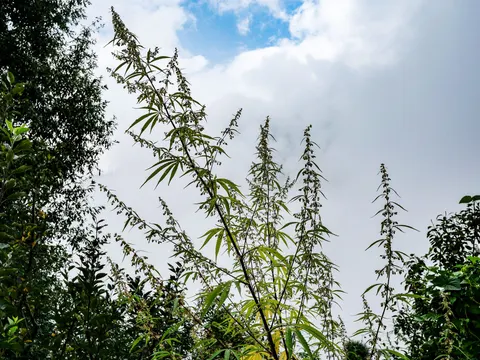
Rumsu General Population 2022
ZOM-IND-HIM-0920220001
Landrace · General population
Rumsu · 2,050 m
#1
Rumsu General Population 2022
ZOM-IND-HIM-0920220001
Landrace · General population
Rumsu · 2,050 m
- Classification
- Landrace
- Accession Type
- General population
- Selection Type
- Not recorded
- Sexual Character
- Dioecious
- Pollination Type
- Open pollination
- Flowering Time
- 16 to 20 weeks
- Plant Height
- 1.5 to 3 m
- Photoperiod
- Short-day
- Chemotype
- Not recorded
- Growth Pattern
- Columnar
- Branching
- Apical dominant
- Leaf
- Intermediate
- Leaflets
- 7, 9
- Leaf Colour
- Dark greens, Purples
- Stem Colour
- Dark greens
- Stigma Colour
- Not recorded
- Serration
- Shallow
- Flower Structure
- Loose, Running
- Aroma
- Mango and carrot with a faint coppery note, the odd plant closer to dairy, sometimes gassy.
- Effect
- Not recorded
- Processing
- Charas
- Processing Notes
- Hand-rubbed charas in cream and business grades; the method is in the report.
- Purpose
- Multipurpose
- Growing Region
- Western Himalayas
- Growing Area
- Kullu Valley
- Appellation
- Chanderkhani Valley
- Country
- India
- Province
- Himachal Pradesh
- District
- Kullu District
- Tehsil
- Kullu Tehsil
- Block
- Naggar Block
- Locality
- Rumsu
- Field
- Not recorded
- Coordinates
- 32.114230, 77.179084
- Elevation
- 2,050 m
- Aspect
- NW, N, NE
- Local Name
- गाँजा
- Pronunciation
- Gāñjā
- Translation
- Not recorded
- Synonyms
- Not recorded
- Method
- Seeds
- Sourcing Type
- Point of origin
- Autochthonous
- Yes
- Collection Date
- 6 September 2022
- Harvest Date
- 2021
- Collector
- Éloïse
- Farmer
- Tek Chand (name changed)
- Expedition
- Himachal 2022
- Note
- Seed separated out by the farmer at the collector's asking and handed over at his house on 6 September 2022, most likely from the 2021 harvest and kept on hand by him or a relative.
- Cultivation System
- Semi-feral, Intercropped
- Scale
- Widespread regional cultivation
- Seed Sourcing
- Seeds are grown on the farm
- Planting Method
- Broadcasting
- Cycle 1 planting
- March to May
- Cycle 1 harvest
- September to December
- Cycle 2 planting
- Not applicable
- Cycle 2 harvest
- Not applicable
- Soil Type
- Not recorded
- Soil pH
- Not recorded
- Estimate
- Not recorded
- Male to Female
- 10
- Hermaphroditism
- 0
- Culling
- Some
- Introgression
- Reported nearby
- Priority
- Medium
- Cultivation Status
- Active
- Enforcement
- Active eradication campaigns
- Eradication Date
- Not recorded
Classification
Botanical
Aroma and effects
Processing and purpose
Geography
Traditional name
Collection
Cultivation
Population
Conservation
Cultivation details
A bag of seed from Tek Chand, the farmer who taught me to rub in the field above Rumsu on 5 September. I asked him to set some seed aside for me. It was ready when I went back to his house the next day. His wife, or a woman of his family, handed it over. She would not take money for it. The seed came from the plants he grows. I did not choose it myself. I collected it on 6 September. It is most likely seed from the 2021 harvest that he had kept.
ZOM-IND-HIM-0920220001 Photographs of this population Also on landrace.wiki
Rumsu 'Village' Selection 2022
ZOM-IND-HIM-0920220002
Landrace · Selection, multiple plants
Rumsu · 2,050 m
#2
Rumsu 'Village' Selection 2022
ZOM-IND-HIM-0920220002
Landrace · Selection, multiple plants
Rumsu · 2,050 m
- Classification
- Landrace
- Accession Type
- Selection
- Selection Type
- Multiple plants
- Sexual Character
- Dioecious
- Pollination Type
- Open pollination
- Flowering Time
- 16 to 20 weeks
- Plant Height
- 1.5 to 3 m
- Photoperiod
- Short-day
- Chemotype
- Not recorded
- Growth Pattern
- Columnar
- Branching
- Apical dominant
- Leaf
- Intermediate
- Leaflets
- 7, 9
- Leaf Colour
- Dark greens, Purples
- Stem Colour
- Dark greens
- Stigma Colour
- Not recorded
- Serration
- Shallow
- Flower Structure
- Loose, Running
- Aroma
- Mango and carrot with a faint coppery note, the odd plant closer to dairy, sometimes gassy.
- Effect
- Not recorded
- Processing
- Charas
- Processing Notes
- Hand-rubbed charas in cream and business grades; the method is in the report.
- Purpose
- Multipurpose
- Growing Region
- Western Himalayas
- Growing Area
- Kullu Valley
- Appellation
- Chanderkhani Valley
- Country
- India
- Province
- Himachal Pradesh
- District
- Kullu District
- Tehsil
- Kullu Tehsil
- Block
- Naggar Block
- Locality
- Rumsu
- Field
- Not recorded
- Coordinates
- 32.114230, 77.179084
- Elevation
- 2,050 m
- Aspect
- NW, N, NE
- Local Name
- गाँजा
- Pronunciation
- Gāñjā
- Translation
- Not recorded
- Synonyms
- Not recorded
- Method
- Seeds
- Sourcing Type
- Point of origin
- Autochthonous
- Yes
- Collection Date
- 3 September 2022
- Harvest Date
- 2022
- Collector
- Éloïse
- Farmer
- Not recorded
- Expedition
- Himachal 2022
- Cultivation System
- Semi-feral, Intercropped
- Scale
- Widespread regional cultivation
- Seed Sourcing
- Seeds are grown on the farm
- Planting Method
- Broadcasting
- Cycle 1 planting
- Not recorded
- Cycle 1 harvest
- Not recorded
- Cycle 2 planting
- Not recorded
- Cycle 2 harvest
- Not recorded
- Soil Type
- Not recorded
- Soil pH
- Not recorded
- Estimate
- Not recorded
- Male to Female
- 10
- Hermaphroditism
- 0
- Culling
- Some
- Introgression
- Reported nearby
- Priority
- Medium
- Cultivation Status
- Active
- Enforcement
- Active eradication campaigns
- Eradication Date
- Not recorded
Classification
Botanical
Aroma and effects
Processing and purpose
Geography
Traditional name
Collection
Cultivation
Population
Conservation
Cultivation details
Seed I picked myself from the small tended patches beside the houses, on 1, 2 and 3 September. I chose the biggest, most resinous, best-smelling plants I could find, though in the first days of September only some of them had ripe seed. I meant to keep the seed of each plant separate. By the end of each walk I could no longer tell them apart, so the seed is mixed.
ZOM-IND-HIM-0920220002 Photographs of this population Also on landrace.wiki
Rumsu 'Upper' Selection 2022
ZOM-IND-HIM-0920220003
Landrace · Selection, multiple plants
Rumsu · 2,250 m
#3
Rumsu 'Upper' Selection 2022
ZOM-IND-HIM-0920220003
Landrace · Selection, multiple plants
Rumsu · 2,250 m
- Classification
- Landrace
- Accession Type
- Selection
- Selection Type
- Multiple plants
- Sexual Character
- Dioecious
- Pollination Type
- Open pollination
- Flowering Time
- 16 to 20 weeks
- Plant Height
- 1.5 to 3 m
- Photoperiod
- Short-day
- Chemotype
- Not recorded
- Growth Pattern
- Columnar
- Branching
- Apical dominant
- Leaf
- Intermediate
- Leaflets
- 7, 9
- Leaf Colour
- Dark greens, Purples
- Stem Colour
- Dark greens
- Stigma Colour
- Not recorded
- Serration
- Shallow
- Flower Structure
- Loose, Running
- Aroma
- Mango and carrot with a faint coppery note, the odd plant closer to dairy, sometimes gassy.
- Effect
- Cream from these fields, a year old, as smoked: gradual, long, a body and mind high with a head high on top. Éloïse's account, not a test.
- Processing
- Charas
- Processing Notes
- Hand-rubbed charas in cream and business grades; the method is in the report.
- Purpose
- Multipurpose
- Growing Region
- Western Himalayas
- Growing Area
- Kullu Valley
- Appellation
- Chanderkhani Valley
- Country
- India
- Province
- Himachal Pradesh
- District
- Kullu District
- Tehsil
- Kullu Tehsil
- Block
- Naggar Block
- Locality
- Rumsu
- Field
- Not recorded
- Coordinates
- 32.108497, 77.184894
- Elevation
- 2,250 m
- Aspect
- N, NE
- Local Name
- गाँजा
- Pronunciation
- Gāñjā
- Translation
- Not recorded
- Synonyms
- Not recorded
- Method
- Seeds
- Sourcing Type
- Point of origin
- Autochthonous
- Yes
- Collection Date
- 5 September 2022
- Harvest Date
- 2022
- Collector
- Éloïse
- Farmer
- Not recorded
- Expedition
- Himachal 2022
- Cultivation System
- Rotating, Monocropped
- Scale
- Widespread regional cultivation
- Seed Sourcing
- Seeds are grown on the farm
- Planting Method
- Broadcasting
- Cycle 1 planting
- March to May
- Cycle 1 harvest
- September to December
- Cycle 2 planting
- Not applicable
- Cycle 2 harvest
- Not applicable
- Soil Type
- Not recorded
- Soil pH
- Not recorded
- Estimate
- Not recorded
- Male to Female
- 10
- Hermaphroditism
- 0
- Culling
- Some
- Introgression
- Reported nearby
- Priority
- Medium
- Cultivation Status
- Active
- Enforcement
- Active eradication campaigns
- Eradication Date
- Not recorded
Classification
Botanical
Aroma and effects
Processing and purpose
Geography
Traditional name
Collection
Cultivation
Population
Conservation
Cultivation details
Seed from plants I chose and rubbed with Tek Chand on 5 September, in the cannabis fields above Rumsu, on the path that climbs toward Pulag, 200 m above the village. The fields are small, hidden from the paths below. When I saw them they were in very good condition. The crop was denser and more productive than on the terraces around the village.
ZOM-IND-HIM-0920220003 Photographs of this population Also on landrace.wiki
Rumsu Feral Selection 2022
ZOM-IND-HIM-0920220004
Feral · Selection, multiple plants
Rumsu · 2,050 m
#4
Rumsu Feral Selection 2022
ZOM-IND-HIM-0920220004
Feral · Selection, multiple plants
Rumsu · 2,050 m
- Classification
- Feral
- Accession Type
- Selection
- Selection Type
- Multiple plants
- Sexual Character
- Dioecious
- Pollination Type
- Open pollination
- Flowering Time
- 16 to 20 weeks
- Plant Height
- 1.5 to 3 m
- Photoperiod
- Short-day
- Chemotype
- Not recorded
- Growth Pattern
- Christmas tree
- Branching
- Apical dominant
- Leaf
- Intermediate
- Leaflets
- 7, 9
- Leaf Colour
- Dark greens
- Stem Colour
- Reds
- Stigma Colour
- Not recorded
- Serration
- Shallow
- Flower Structure
- Loose, Running
- Aroma
- Not recorded
- Effect
- Not recorded
- Processing
- Charas
- Processing Notes
- Hand-rubbed charas in cream and business grades; the method is in the report.
- Purpose
- Not recorded
- Growing Region
- Western Himalayas
- Growing Area
- Kullu Valley
- Appellation
- Chanderkhani Valley
- Country
- India
- Province
- Himachal Pradesh
- District
- Kullu District
- Tehsil
- Kullu Tehsil
- Block
- Naggar Block
- Locality
- Rumsu
- Field
- Not recorded
- Coordinates
- 32.114230, 77.179084
- Elevation
- 2,050 m
- Aspect
- NW, N, NE
- Local Name
- जंगली भांग
- Pronunciation
- Junglī bhāng
- Translation
- Not recorded
- Synonyms
- Not recorded
- Method
- Seeds
- Sourcing Type
- Point of origin
- Autochthonous
- Yes
- Collection Date
- 3 September 2022
- Harvest Date
- 2022
- Collector
- Éloïse
- Farmer
- Not recorded
- Expedition
- Himachal 2022
- Note
- Males about half of the volunteers by the collector's eye, ruled 10 September 2026; her 2022 sheet had 10 percent.
- Cultivation System
- Feral
- Scale
- Widespread feral populations
- Seed Sourcing
- Population is self reproducing
- Planting Method
- Self reproducing
- Cycle 1 planting
- Not recorded
- Cycle 1 harvest
- Not recorded
- Cycle 2 planting
- Not recorded
- Cycle 2 harvest
- Not recorded
- Soil Type
- Not recorded
- Soil pH
- Not recorded
- Estimate
- Not recorded
- Male to Female
- 50
- Hermaphroditism
- 0
- Culling
- No
- Introgression
- Reported nearby
- Priority
- Low
- Cultivation Status
- Active
- Enforcement
- Active eradication campaigns
- Eradication Date
- Not recorded
Classification
Botanical
Aroma and effects
Processing and purpose
Geography
Traditional name
Collection
Cultivation
Population
Conservation
Cultivation details
Seed I picked from feral plants around the village, where they grow thin and scattered through the apple terraces. Nobody tends them.
ZOM-IND-HIM-0920220004 Photographs of this population Also on landrace.wiki
11.2 Pulag
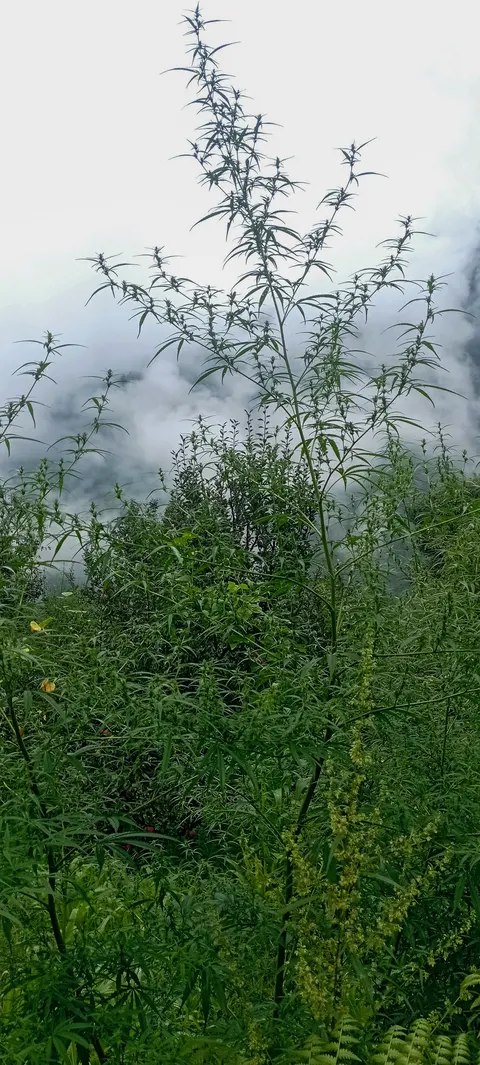
Pulag General Population 2022
ZOM-IND-HIM-0920220005
Landrace · General population
Pulag · 2,200 m
#1
Pulag General Population 2022
ZOM-IND-HIM-0920220005
Landrace · General population
Pulag · 2,200 m
- Classification
- Landrace
- Accession Type
- General population
- Selection Type
- Not recorded
- Sexual Character
- Dioecious
- Pollination Type
- Open pollination
- Flowering Time
- 16 to 20 weeks
- Plant Height
- 1.5 to 3 m
- Photoperiod
- Short-day
- Chemotype
- Not recorded
- Growth Pattern
- Columnar
- Branching
- Apical dominant
- Leaf
- Intermediate
- Leaflets
- 7, 9
- Leaf Colour
- Dark greens, Purples
- Stem Colour
- Dark greens
- Stigma Colour
- Not recorded
- Serration
- Shallow
- Flower Structure
- Loose, Running
- Aroma
- Mango and carrot with a faint coppery note, the odd plant closer to dairy, sometimes gassy.
- Effect
- Not recorded
- Processing
- Charas
- Processing Notes
- Hand-rubbed charas in cream and business grades; the method is in the report.
- Purpose
- Multipurpose
- Growing Region
- Western Himalayas
- Growing Area
- Kullu Valley
- Appellation
- Chanderkhani Valley
- Country
- India
- Province
- Himachal Pradesh
- District
- Kullu District
- Tehsil
- Kullu Tehsil
- Block
- Naggar Block
- Locality
- Pulag
- Field
- Not recorded
- Coordinates
- 32.106022, 77.198350
- Elevation
- 2,200 m
- Aspect
- N, NE
- Local Name
- गाँजा
- Pronunciation
- Gāñjā
- Translation
- Not recorded
- Synonyms
- Not recorded
- Method
- Seeds
- Sourcing Type
- Point of origin
- Autochthonous
- Yes
- Collection Date
- 4 September 2022
- Harvest Date
- 2021
- Collector
- Éloïse
- Farmer
- Farmers met at Pulag, unnamed
- Expedition
- Himachal 2022
- Note
- Collected on the afternoon of 4 September 2022 with the other Pulag and Hallan rows, on the collector's account and the frames of the 4th and 5th; the sheet had carried the 5th.
- Cultivation System
- Semi-feral, Intercropped
- Scale
- Widespread regional cultivation
- Seed Sourcing
- Seeds are grown on the farm
- Planting Method
- Broadcasting
- Cycle 1 planting
- March to May
- Cycle 1 harvest
- September to December
- Cycle 2 planting
- Not applicable
- Cycle 2 harvest
- Not applicable
- Soil Type
- Not recorded
- Soil pH
- Not recorded
- Estimate
- Not recorded
- Male to Female
- 10
- Hermaphroditism
- 0
- Culling
- Some
- Introgression
- Reported nearby
- Priority
- Medium
- Cultivation Status
- Active
- Enforcement
- Active eradication campaigns
- Eradication Date
- Not recorded
Classification
Botanical
Aroma and effects
Processing and purpose
Geography
Traditional name
Collection
Cultivation
Population
Conservation
Cultivation details
A bag of seed given to me at Pulag, at 2,200 m, on the afternoon of 4 September, together with charas I paid for. I hardly spoke to the people who gave it to me. At Pulag cannabis grows in small patches and stands on both sides of the stream. This seed came from the plants they grow.
ZOM-IND-HIM-0920220005 Photographs of this population Also on landrace.wiki
Pulag 'Village' Selection 2022
ZOM-IND-HIM-0920220006
Landrace · Selection, multiple plants
Pulag · 2,200 m
#2
Pulag 'Village' Selection 2022
ZOM-IND-HIM-0920220006
Landrace · Selection, multiple plants
Pulag · 2,200 m
- Classification
- Landrace
- Accession Type
- Selection
- Selection Type
- Multiple plants
- Sexual Character
- Dioecious
- Pollination Type
- Open pollination
- Flowering Time
- 16 to 20 weeks
- Plant Height
- 1.5 to 3 m
- Photoperiod
- Short-day
- Chemotype
- Not recorded
- Growth Pattern
- Columnar
- Branching
- Apical dominant
- Leaf
- Intermediate
- Leaflets
- 7, 9
- Leaf Colour
- Dark greens, Purples
- Stem Colour
- Dark greens
- Stigma Colour
- Not recorded
- Serration
- Shallow
- Flower Structure
- Loose, Running
- Aroma
- Mango and carrot with a faint coppery note, the odd plant closer to dairy, sometimes gassy.
- Effect
- Not recorded
- Processing
- Charas
- Processing Notes
- Hand-rubbed charas in cream and business grades; the method is in the report.
- Purpose
- Multipurpose
- Growing Region
- Western Himalayas
- Growing Area
- Kullu Valley
- Appellation
- Chanderkhani Valley
- Country
- India
- Province
- Himachal Pradesh
- District
- Kullu District
- Tehsil
- Kullu Tehsil
- Block
- Naggar Block
- Locality
- Pulag
- Field
- Not recorded
- Coordinates
- 32.106022, 77.198350
- Elevation
- 2,200 m
- Aspect
- N, NE
- Local Name
- गाँजा
- Pronunciation
- Gāñjā
- Translation
- Not recorded
- Synonyms
- Not recorded
- Method
- Seeds
- Sourcing Type
- Point of origin
- Autochthonous
- Yes
- Collection Date
- 4 September 2022
- Harvest Date
- 2022
- Collector
- Éloïse
- Farmer
- Not recorded
- Expedition
- Himachal 2022
- Cultivation System
- Semi-feral, Intercropped
- Scale
- Widespread regional cultivation
- Seed Sourcing
- Seeds are grown on the farm
- Planting Method
- Broadcasting
- Cycle 1 planting
- March to May
- Cycle 1 harvest
- September to December
- Cycle 2 planting
- Not applicable
- Cycle 2 harvest
- Not applicable
- Soil Type
- Not recorded
- Soil pH
- Not recorded
- Estimate
- Not recorded
- Male to Female
- 10
- Hermaphroditism
- 0
- Culling
- Some
- Introgression
- Reported nearby
- Priority
- Medium
- Cultivation Status
- Active
- Enforcement
- Active eradication campaigns
- Eradication Date
- Not recorded
Classification
Botanical
Aroma and effects
Processing and purpose
Geography
Traditional name
Collection
Cultivation
Population
Conservation
Cultivation details
Seed I picked myself from a few plants in the patches near the village, on the afternoon of 4 September. I picked it quickly on the way into the village. It was raining, so I could not photograph the plants.
ZOM-IND-HIM-0920220006 Photographs of this population Also on landrace.wiki
Pulag 'Upper' Selection 2022
ZOM-IND-HIM-0920220007
Landrace · Selection, multiple plants
Pulag · 2,400 m
#3
Pulag 'Upper' Selection 2022
ZOM-IND-HIM-0920220007
Landrace · Selection, multiple plants
Pulag · 2,400 m
- Classification
- Landrace
- Accession Type
- Selection
- Selection Type
- Multiple plants
- Sexual Character
- Dioecious
- Pollination Type
- Open pollination
- Flowering Time
- 16 to 20 weeks
- Plant Height
- 1.5 to 3 m
- Photoperiod
- Short-day
- Chemotype
- Not recorded
- Growth Pattern
- Columnar
- Branching
- Apical dominant
- Leaf
- Intermediate
- Leaflets
- 7, 9
- Leaf Colour
- Dark greens, Purples
- Stem Colour
- Dark greens
- Stigma Colour
- Not recorded
- Serration
- Shallow
- Flower Structure
- Loose, Running
- Aroma
- Mango and carrot with a faint coppery note, the odd plant closer to dairy, sometimes gassy.
- Effect
- Not recorded
- Processing
- Charas
- Processing Notes
- Hand-rubbed charas in cream and business grades; the method is in the report.
- Purpose
- Multipurpose
- Growing Region
- Western Himalayas
- Growing Area
- Kullu Valley
- Appellation
- Chanderkhani Valley
- Country
- India
- Province
- Himachal Pradesh
- District
- Kullu District
- Tehsil
- Kullu Tehsil
- Block
- Naggar Block
- Locality
- Pulag
- Field
- Not recorded
- Coordinates
- 32.103026, 77.199878
- Elevation
- 2,400 m
- Aspect
- N, NE
- Local Name
- गाँजा
- Pronunciation
- Gāñjā
- Translation
- Not recorded
- Synonyms
- Not recorded
- Method
- Seeds
- Sourcing Type
- Point of origin
- Autochthonous
- Yes
- Collection Date
- 5 September 2022
- Harvest Date
- 2022
- Collector
- Éloïse
- Farmer
- Not recorded
- Expedition
- Himachal 2022
- Cultivation System
- Rotating, Monocropped
- Scale
- Widespread regional cultivation
- Seed Sourcing
- Seeds are grown on the farm
- Planting Method
- Broadcasting
- Cycle 1 planting
- March to May
- Cycle 1 harvest
- September to December
- Cycle 2 planting
- Not applicable
- Cycle 2 harvest
- Not applicable
- Soil Type
- Not recorded
- Soil pH
- Not recorded
- Estimate
- Not recorded
- Male to Female
- 10
- Hermaphroditism
- 0
- Culling
- Some
- Introgression
- Reported nearby
- Priority
- Medium
- Cultivation Status
- Active
- Enforcement
- Active eradication campaigns
- Eradication Date
- Not recorded
Classification
Botanical
Aroma and effects
Processing and purpose
Geography
Traditional name
Collection
Cultivation
Population
Conservation
Cultivation details
Seed from plants I chose and rubbed in the cannabis fields on the path from Pulag toward the Chanderkhani Pass, collected on 5 September. The fields are at about 2,400 m, some 200 m above the village. They were the highest fields I saw in the Kullu Valley.
ZOM-IND-HIM-0920220007 Photographs of this population Also on landrace.wiki
Pulag Feral Selection 2022
ZOM-IND-HIM-0920220008
Feral · Selection, multiple plants
Pulag · 2,200 m
#4
Pulag Feral Selection 2022
ZOM-IND-HIM-0920220008
Feral · Selection, multiple plants
Pulag · 2,200 m
- Classification
- Feral
- Accession Type
- Selection
- Selection Type
- Multiple plants
- Sexual Character
- Dioecious
- Pollination Type
- Open pollination
- Flowering Time
- 16 to 20 weeks
- Plant Height
- 1.5 to 3 m
- Photoperiod
- Short-day
- Chemotype
- Not recorded
- Growth Pattern
- Christmas tree
- Branching
- Apical dominant
- Leaf
- Intermediate
- Leaflets
- 7, 9
- Leaf Colour
- Dark greens
- Stem Colour
- Reds
- Stigma Colour
- Not recorded
- Serration
- Shallow
- Flower Structure
- Loose, Running
- Aroma
- Not recorded
- Effect
- Not recorded
- Processing
- Charas
- Processing Notes
- Hand-rubbed charas in cream and business grades; the method is in the report.
- Purpose
- Not recorded
- Growing Region
- Western Himalayas
- Growing Area
- Kullu Valley
- Appellation
- Chanderkhani Valley
- Country
- India
- Province
- Himachal Pradesh
- District
- Kullu District
- Tehsil
- Kullu Tehsil
- Block
- Naggar Block
- Locality
- Pulag
- Field
- Not recorded
- Coordinates
- 32.106022, 77.198350
- Elevation
- 2,200 m
- Aspect
- N, NE
- Local Name
- जंगली भांग
- Pronunciation
- Junglī bhāng
- Translation
- Not recorded
- Synonyms
- Not recorded
- Method
- Seeds
- Sourcing Type
- Point of origin
- Autochthonous
- Yes
- Collection Date
- 4 September 2022
- Harvest Date
- 2022
- Collector
- Éloïse
- Farmer
- Not recorded
- Expedition
- Himachal 2022
- Note
- Males about half of the volunteers by the collector's eye, ruled 10 September 2026; her 2022 sheet had 30 percent.
- Cultivation System
- Feral
- Scale
- Widespread feral populations
- Seed Sourcing
- Population is self reproducing
- Planting Method
- Self reproducing
- Cycle 1 planting
- March to May
- Cycle 1 harvest
- September to December
- Cycle 2 planting
- Not applicable
- Cycle 2 harvest
- Not applicable
- Soil Type
- Not recorded
- Soil pH
- Not recorded
- Estimate
- Not recorded
- Male to Female
- 50
- Hermaphroditism
- 0
- Culling
- No
- Introgression
- Reported nearby
- Priority
- Low
- Cultivation Status
- Active
- Enforcement
- Active eradication campaigns
- Eradication Date
- Not recorded
Classification
Botanical
Aroma and effects
Processing and purpose
Geography
Traditional name
Collection
Cultivation
Population
Conservation
Cultivation details
Seed I picked by hand from feral plants around the village, at 2,200 m, on 4 September. I was told the police were in the village that afternoon, cutting down cannabis. I had to talk Roshan Thakur, who was with me, into letting me stop to pick it.
ZOM-IND-HIM-0920220008 Photographs of this population Also on landrace.wiki
11.3 Hallan
Hallan General Population 2022
ZOM-IND-HIM-0920220009
Landrace · General population
Hallan · 2,275 m
#1
Hallan General Population 2022
ZOM-IND-HIM-0920220009
Landrace · General population
Hallan · 2,275 m
- Classification
- Landrace
- Accession Type
- General population
- Selection Type
- Not recorded
- Sexual Character
- Dioecious
- Pollination Type
- Open pollination
- Flowering Time
- 16 to 20 weeks
- Plant Height
- 1.5 to 3 m
- Photoperiod
- Short-day
- Chemotype
- Not recorded
- Growth Pattern
- Columnar
- Branching
- Apical dominant
- Leaf
- Intermediate
- Leaflets
- 7, 9
- Leaf Colour
- Dark greens, Purples
- Stem Colour
- Dark greens
- Stigma Colour
- Not recorded
- Serration
- Shallow
- Flower Structure
- Loose, Running
- Aroma
- Mango and carrot with a faint coppery note, the odd plant closer to dairy, sometimes gassy.
- Effect
- Not recorded
- Processing
- Charas
- Processing Notes
- Hand-rubbed charas in cream and business grades; the method is in the report.
- Purpose
- Multipurpose
- Growing Region
- Western Himalayas
- Growing Area
- Kullu Valley
- Appellation
- Chanderkhani Valley
- Country
- India
- Province
- Himachal Pradesh
- District
- Kullu District
- Tehsil
- Kullu Tehsil
- Block
- Naggar Block
- Locality
- Hallan
- Field
- Not recorded
- Coordinates
- 32.121938, 77.193850
- Elevation
- 2,275 m
- Aspect
- SW
- Local Name
- गाँजा
- Pronunciation
- Gāñjā
- Translation
- Not recorded
- Synonyms
- Not recorded
- Method
- Seeds
- Sourcing Type
- Point of origin
- Autochthonous
- Yes
- Collection Date
- 4 September 2022
- Harvest Date
- 2021
- Collector
- Éloïse
- Farmer
- Friends of Roshan Thakur (name changed)
- Expedition
- Himachal 2022
- Note
- Collected on the afternoon of 4 September 2022 with the other Pulag and Hallan rows, on the collector's account and the frames of the 4th and 5th; the sheet had carried the 5th.
- Cultivation System
- Semi-feral, Intercropped
- Scale
- Widespread regional cultivation
- Seed Sourcing
- Seeds are grown on the farm
- Planting Method
- Broadcasting
- Cycle 1 planting
- Not recorded
- Cycle 1 harvest
- Not recorded
- Cycle 2 planting
- Not recorded
- Cycle 2 harvest
- Not recorded
- Soil Type
- Not recorded
- Soil pH
- Not recorded
- Estimate
- Not recorded
- Male to Female
- 10
- Hermaphroditism
- 0
- Culling
- Some
- Introgression
- Reported nearby
- Priority
- Medium
- Cultivation Status
- Active
- Enforcement
- Active eradication campaigns
- Eradication Date
- Not recorded
Classification
Botanical
Aroma and effects
Processing and purpose
Geography
Traditional name
Collection
Cultivation
Population
Conservation
Cultivation details
A bag of seed given to me at Hallan, at 2,275 m, on the afternoon of 4 September, by Roshan Thakur’s friends in the village. It came together with charas I paid for. Hallan has small patches of cannabis all around the village, with larger fields high above it. I did not go up to the high fields myself.
ZOM-IND-HIM-0920220009 Photographs of this population Also on landrace.wiki
Hallan 'Village' Selection 2022
ZOM-IND-HIM-0920220010
Landrace · Selection, multiple plants
Hallan · 2,275 m
#2
Hallan 'Village' Selection 2022
ZOM-IND-HIM-0920220010
Landrace · Selection, multiple plants
Hallan · 2,275 m
- Classification
- Landrace
- Accession Type
- Selection
- Selection Type
- Multiple plants
- Sexual Character
- Dioecious
- Pollination Type
- Open pollination
- Flowering Time
- 16 to 20 weeks
- Plant Height
- 1.5 to 3 m
- Photoperiod
- Short-day
- Chemotype
- Not recorded
- Growth Pattern
- Columnar
- Branching
- Apical dominant
- Leaf
- Intermediate
- Leaflets
- 7, 9
- Leaf Colour
- Dark greens, Purples
- Stem Colour
- Dark greens
- Stigma Colour
- Not recorded
- Serration
- Shallow
- Flower Structure
- Loose, Running
- Aroma
- Mango and carrot with a faint coppery note, the odd plant closer to dairy, sometimes gassy.
- Effect
- Not recorded
- Processing
- Charas
- Processing Notes
- Hand-rubbed charas in cream and business grades; the method is in the report.
- Purpose
- Multipurpose
- Growing Region
- Western Himalayas
- Growing Area
- Kullu Valley
- Appellation
- Chanderkhani Valley
- Country
- India
- Province
- Himachal Pradesh
- District
- Kullu District
- Tehsil
- Kullu Tehsil
- Block
- Naggar Block
- Locality
- Hallan
- Field
- Not recorded
- Coordinates
- 32.121938, 77.193850
- Elevation
- 2,275 m
- Aspect
- SW
- Local Name
- गाँजा
- Pronunciation
- Gāñjā
- Translation
- Not recorded
- Synonyms
- Not recorded
- Method
- Seeds
- Sourcing Type
- Point of origin
- Autochthonous
- Yes
- Collection Date
- 4 September 2022
- Harvest Date
- 2022
- Collector
- Éloïse
- Farmer
- Not recorded
- Expedition
- Himachal 2022
- Note
- Collected on the afternoon of 4 September 2022 with the other Pulag and Hallan rows, on the collector's account and the frames of the 4th and 5th; the sheet had carried the 5th.
- Cultivation System
- Semi-feral, Intercropped
- Scale
- Widespread regional cultivation
- Seed Sourcing
- Seeds are grown on the farm
- Planting Method
- Broadcasting
- Cycle 1 planting
- Not recorded
- Cycle 1 harvest
- Not recorded
- Cycle 2 planting
- Not recorded
- Cycle 2 harvest
- Not recorded
- Soil Type
- Not recorded
- Soil pH
- Not recorded
- Estimate
- Not recorded
- Male to Female
- 10
- Hermaphroditism
- 0
- Culling
- Some
- Introgression
- Reported nearby
- Priority
- Medium
- Cultivation Status
- Active
- Enforcement
- Active eradication campaigns
- Eradication Date
- Not recorded
Classification
Botanical
Aroma and effects
Processing and purpose
Geography
Traditional name
Collection
Cultivation
Population
Conservation
Cultivation details
Seed I picked myself from a few plants in the patches near the village, that afternoon. I picked it quickly on the way into the village. It was raining, so I could not photograph the plants.
ZOM-IND-HIM-0920220010 Photographs of this population Also on landrace.wiki
Photographs
124 photographs, 1 to 5 September 2022. All photographs from this expedition
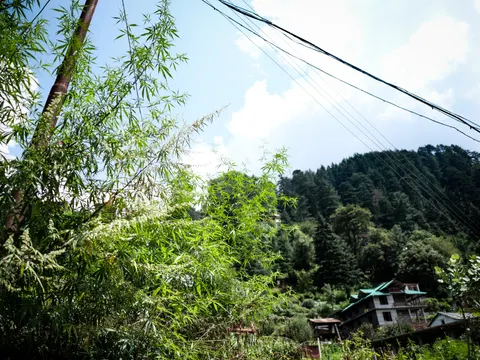
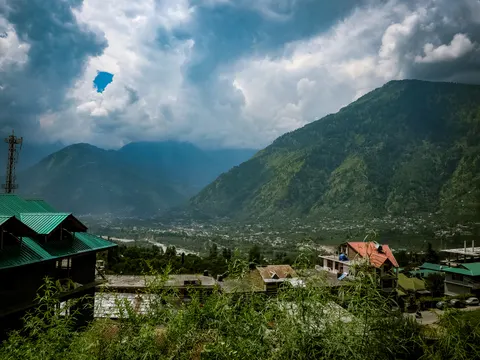
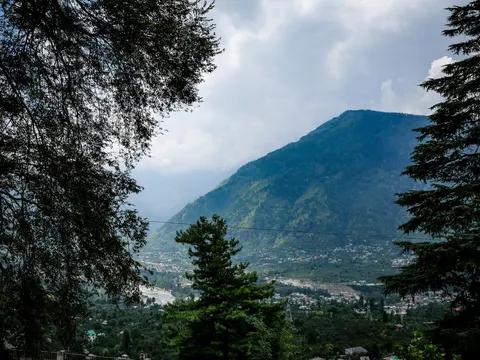
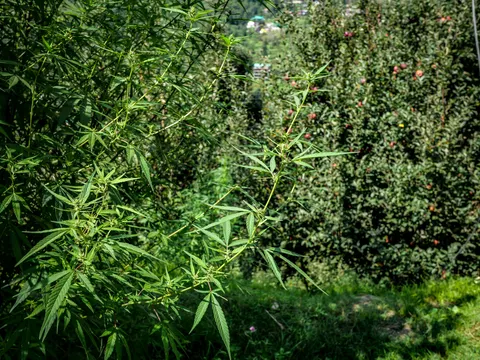
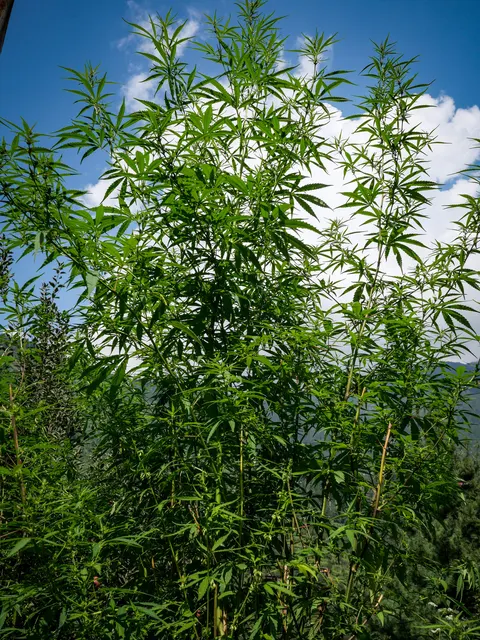
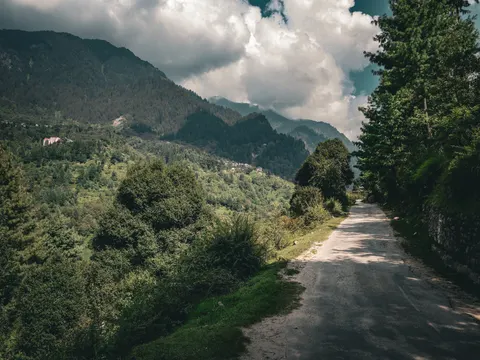
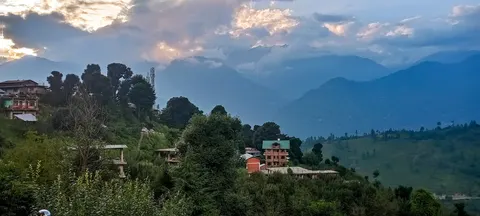
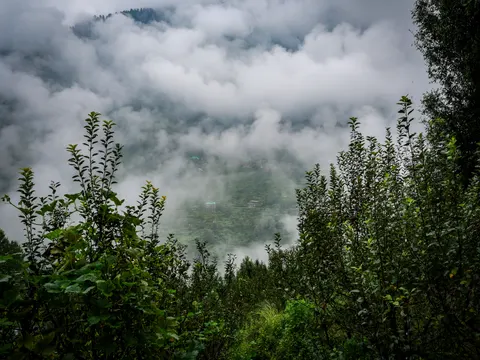
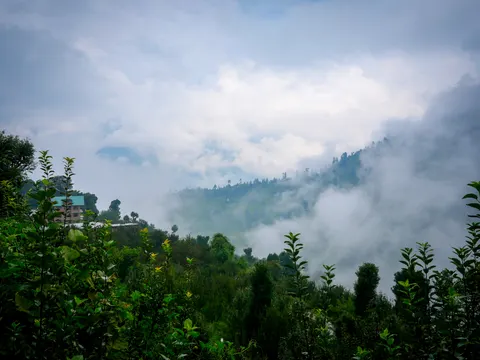
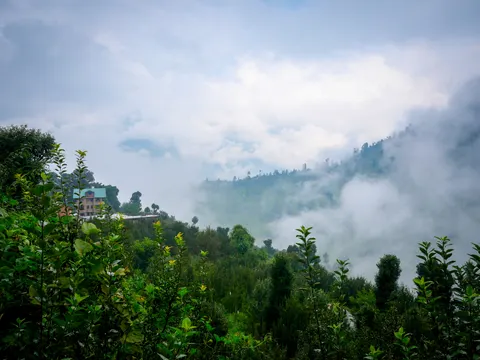
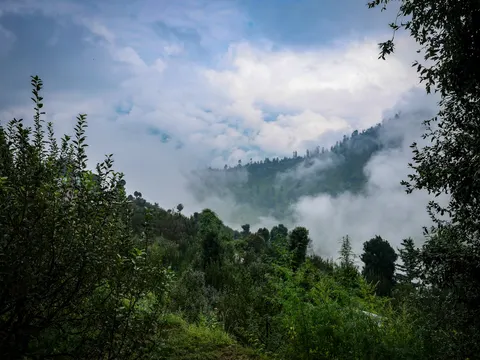
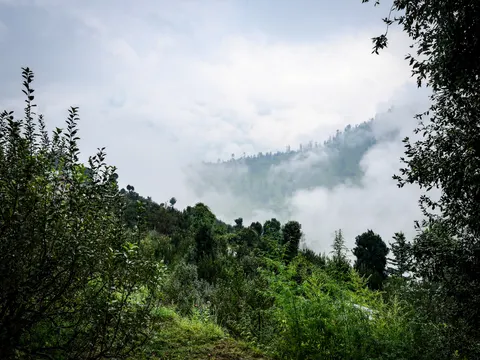
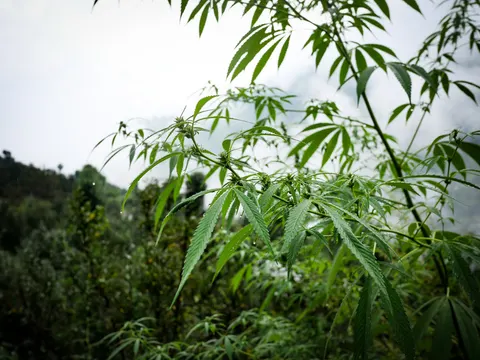
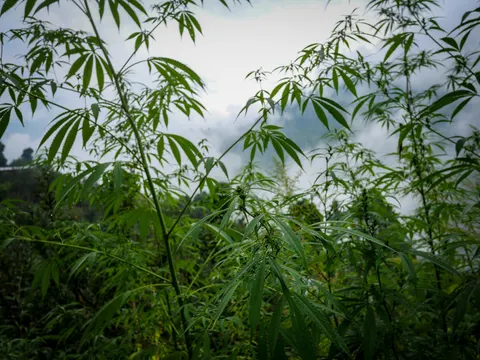
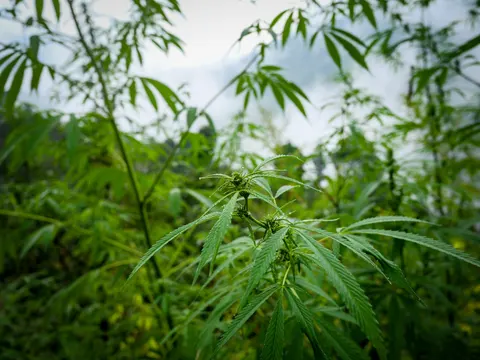
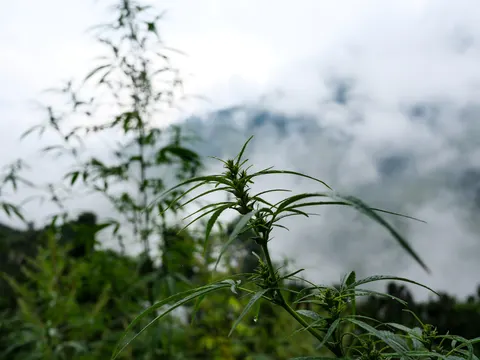
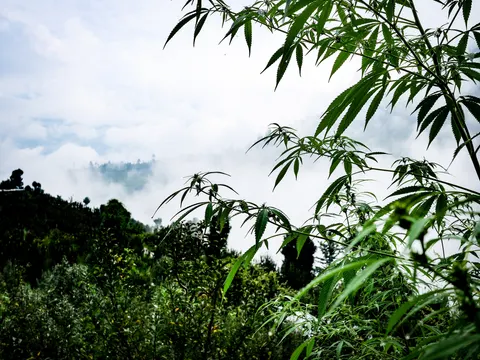
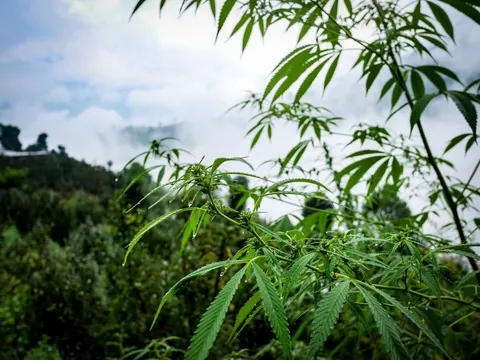
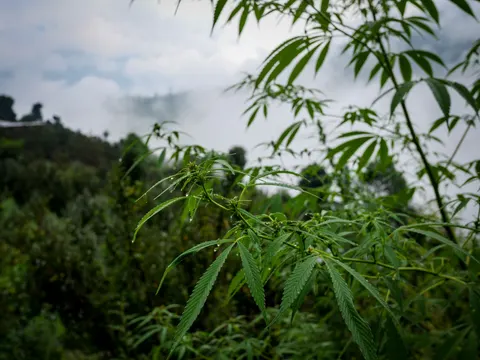
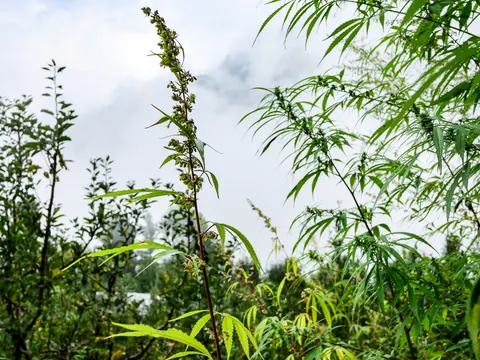
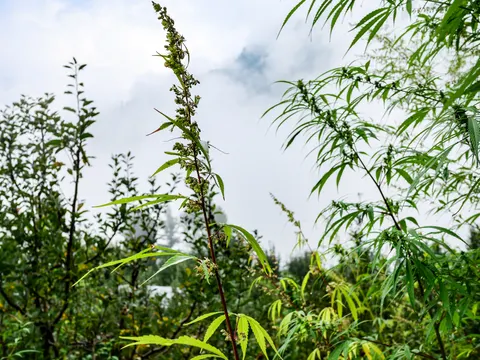
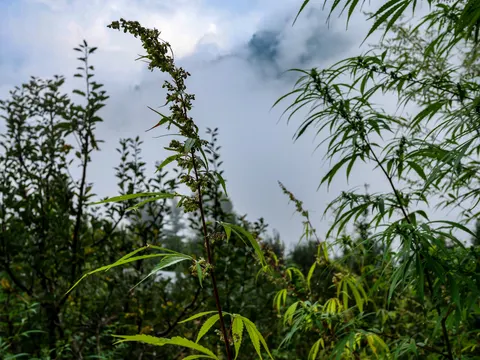
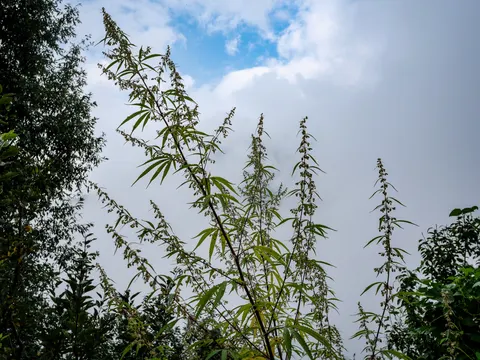
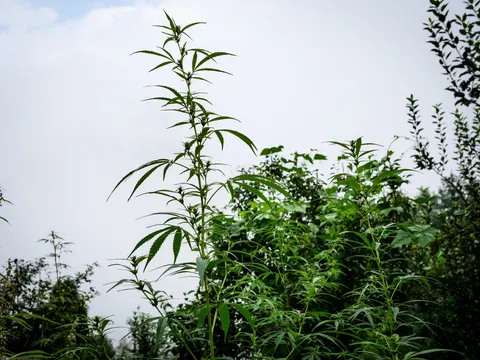
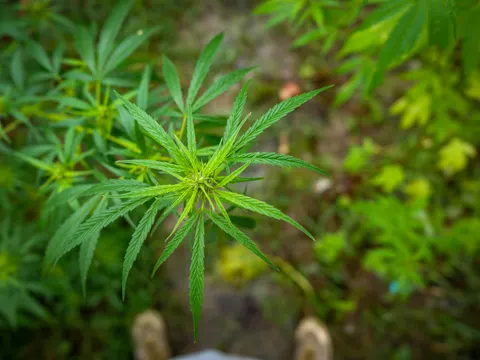
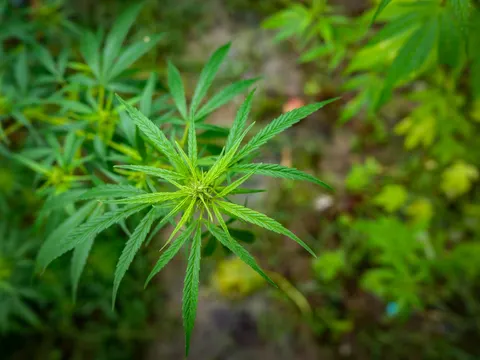
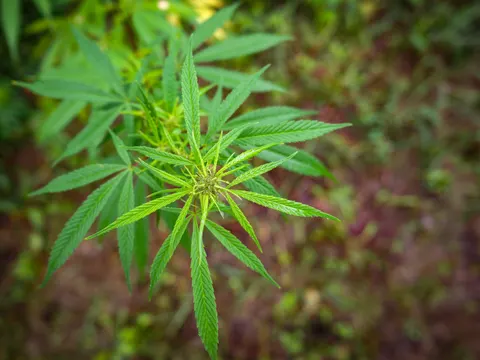
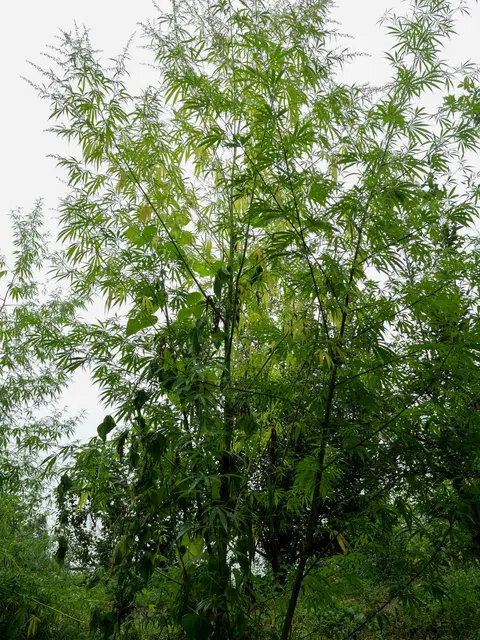
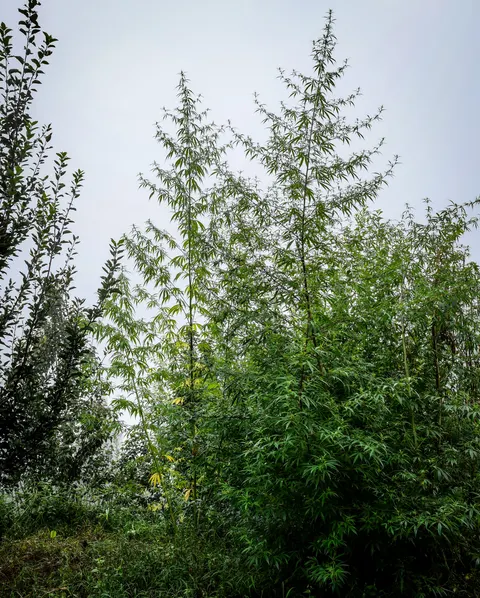
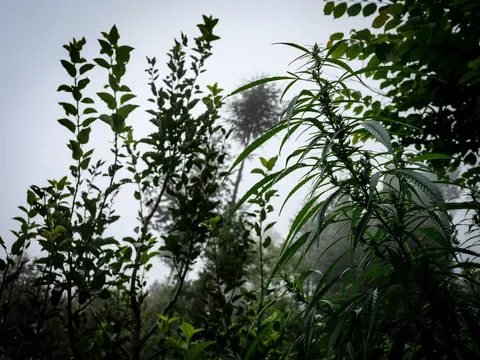
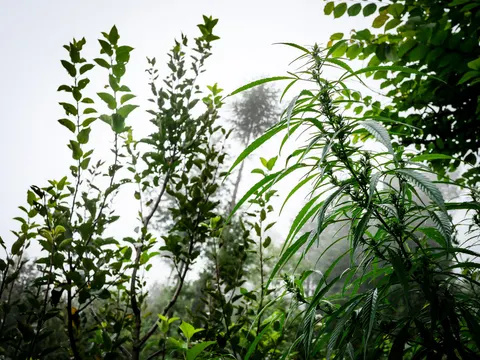
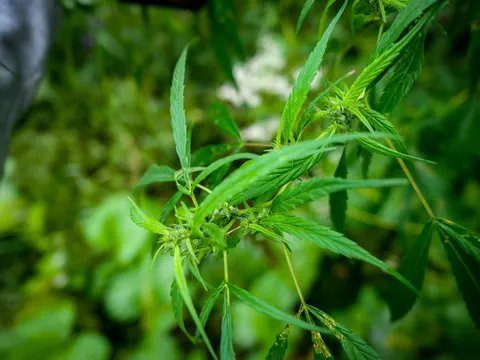
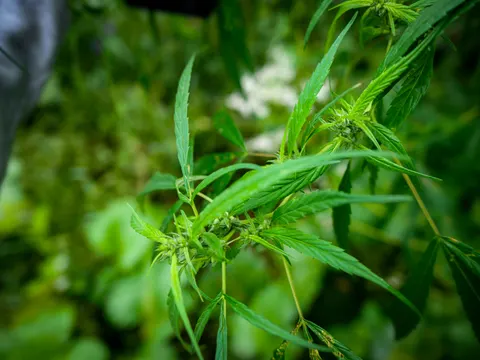
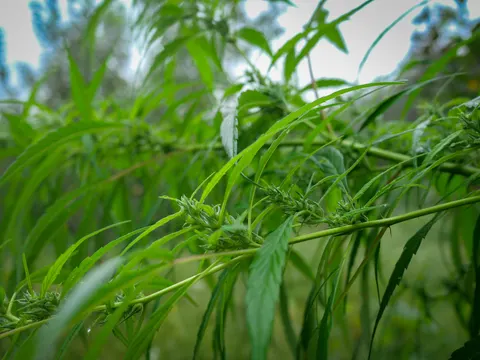
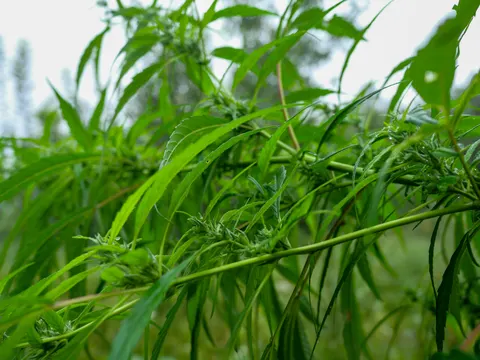
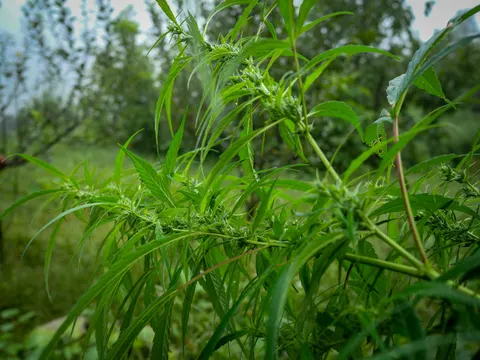
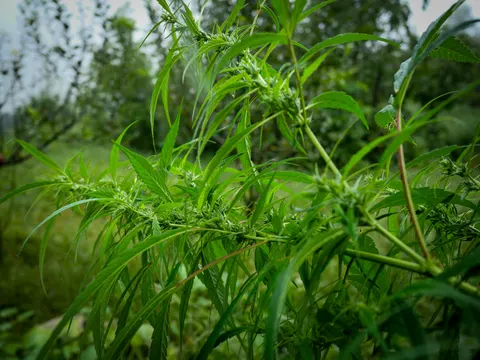
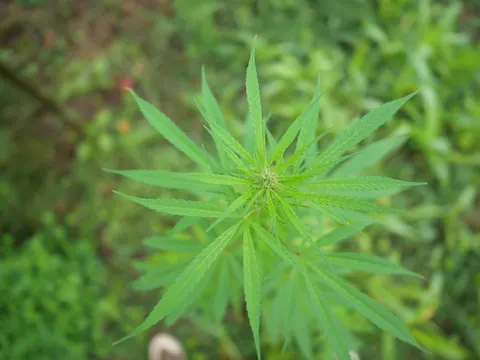
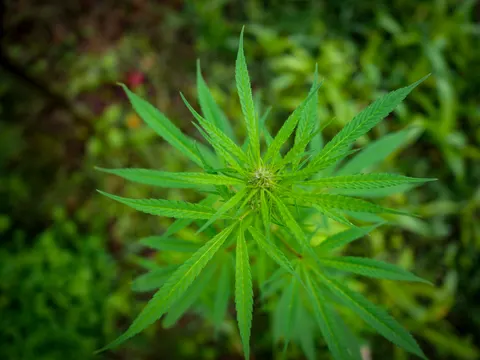
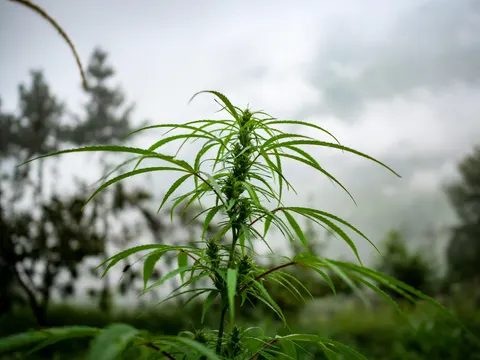
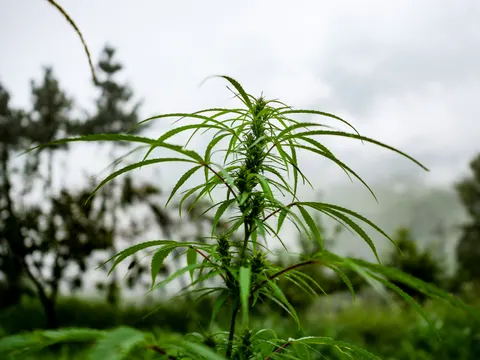
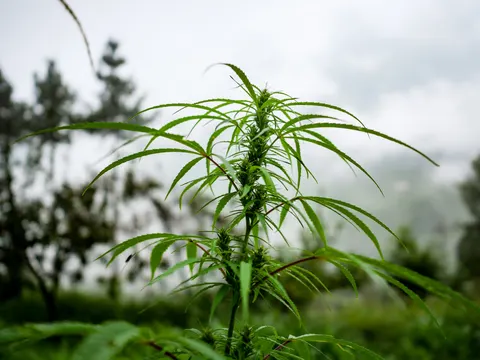
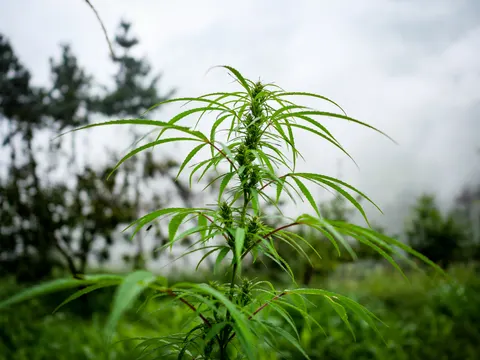
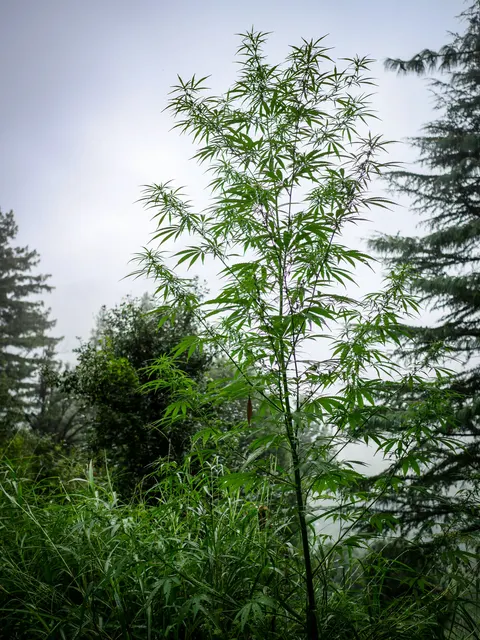
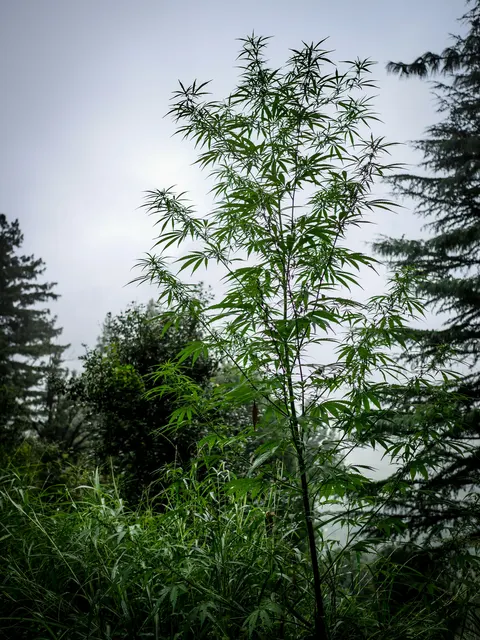
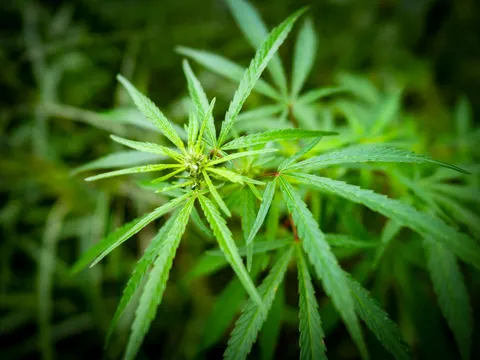
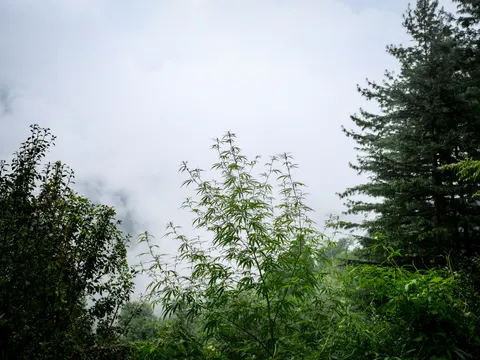
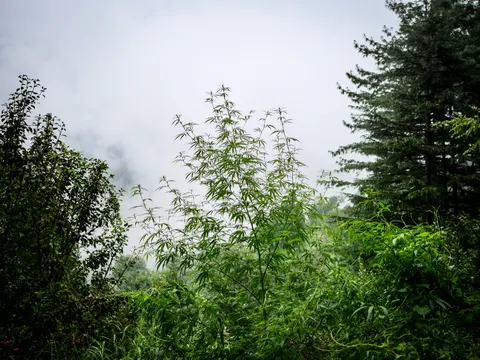
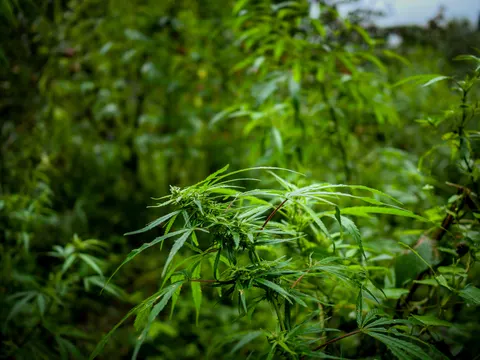
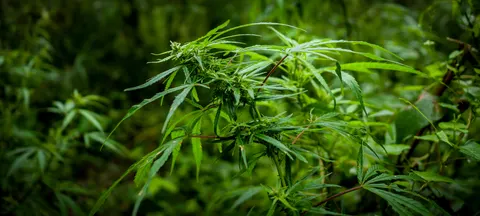
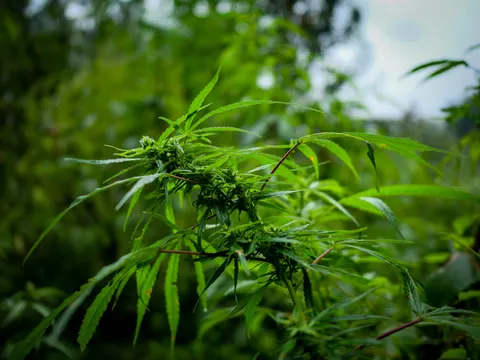
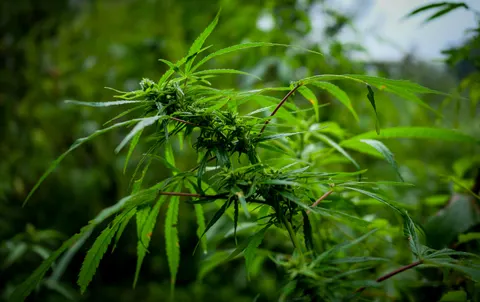
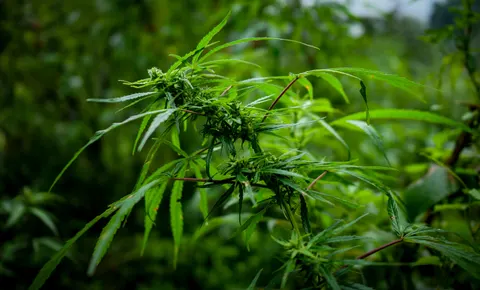
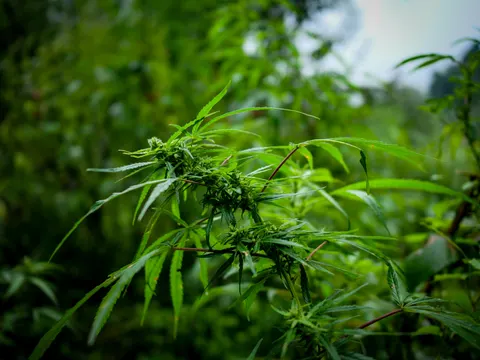
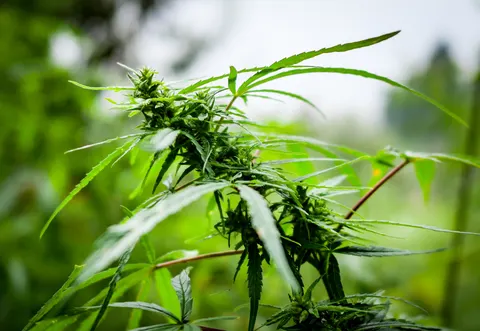
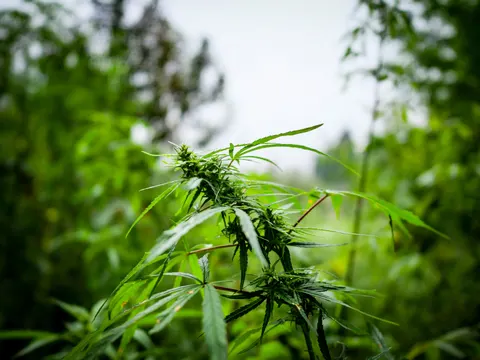
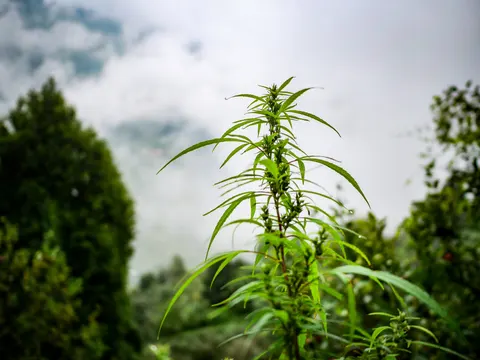
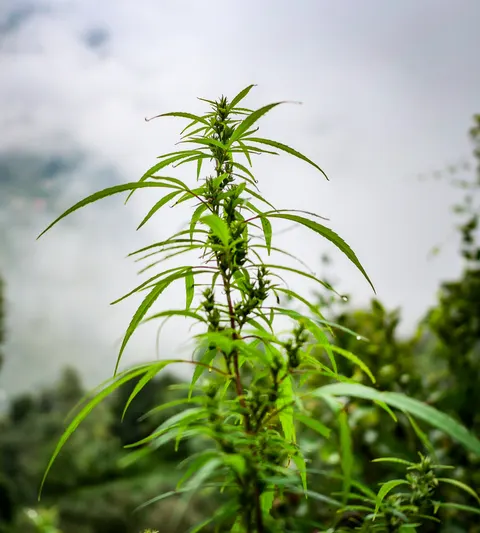
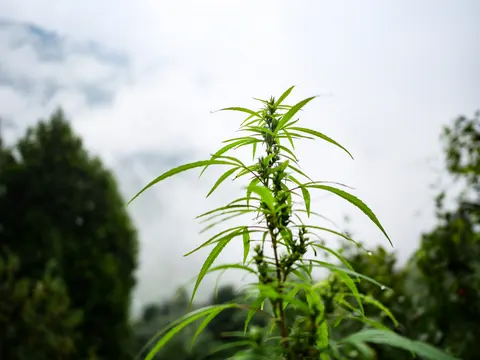
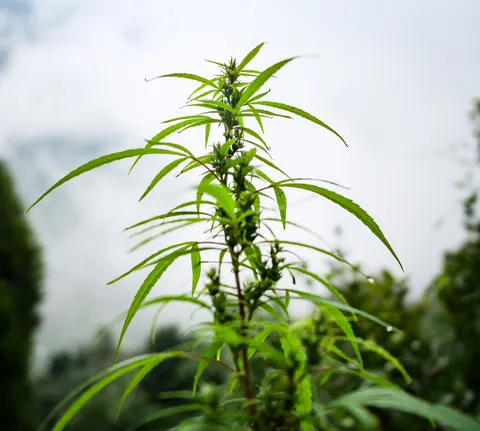
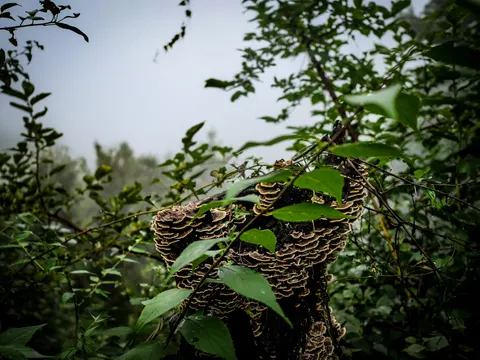
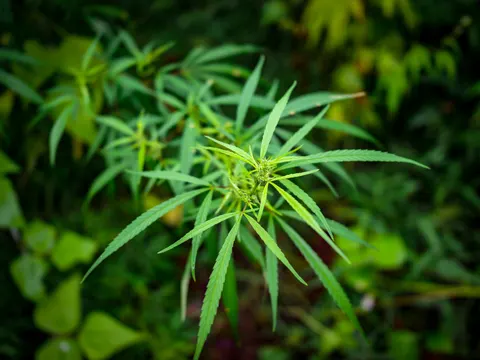
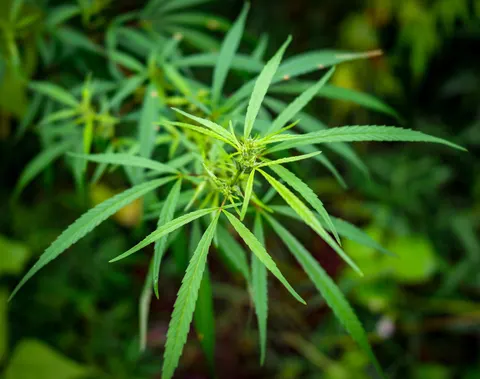
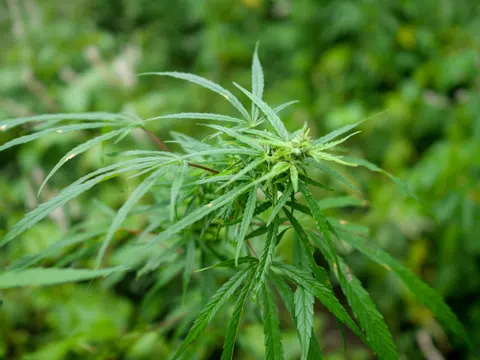
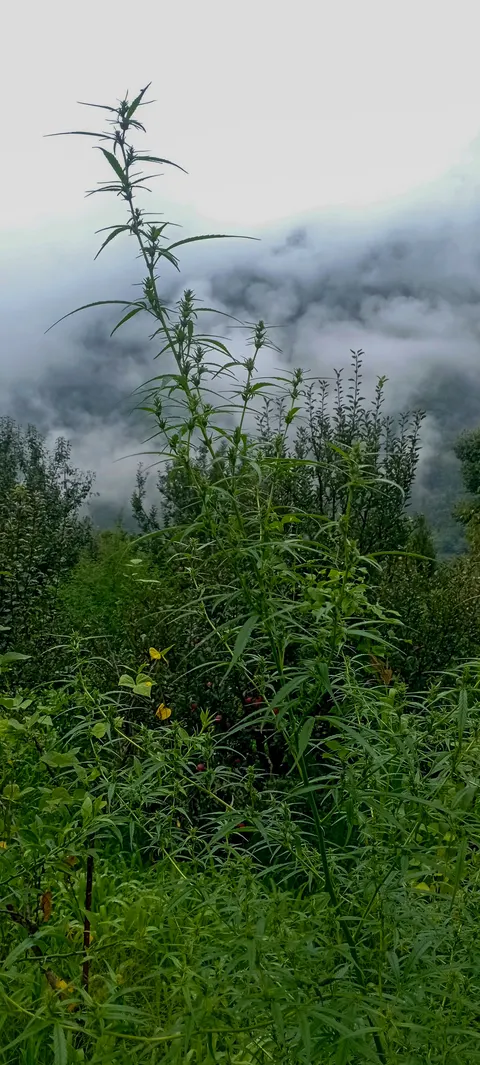
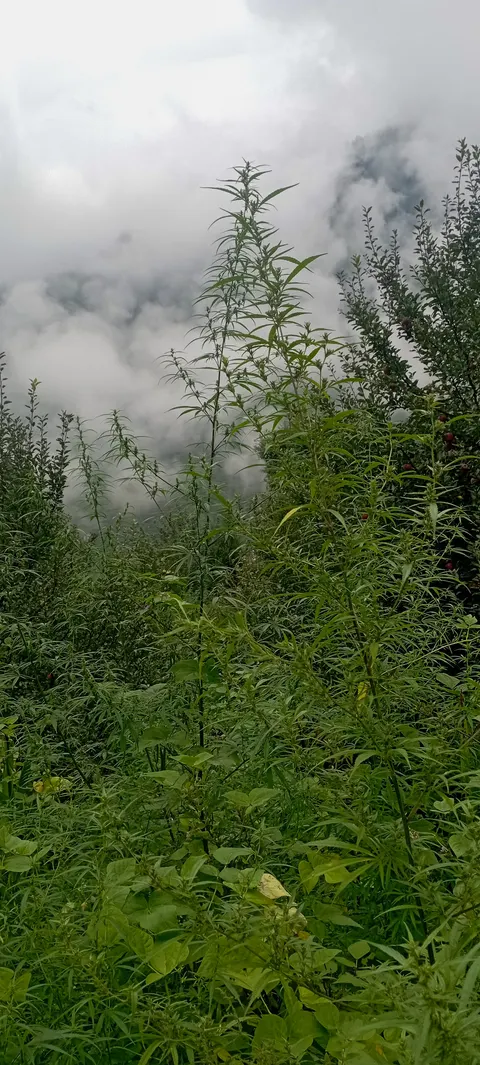
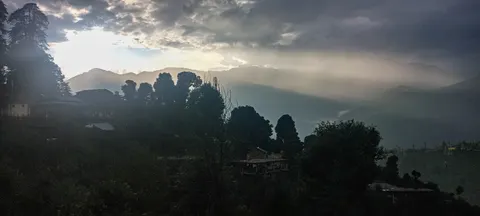
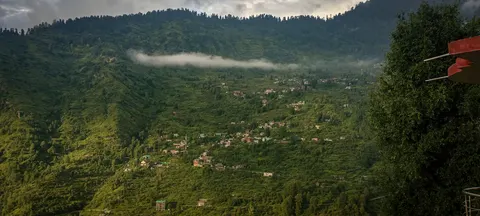
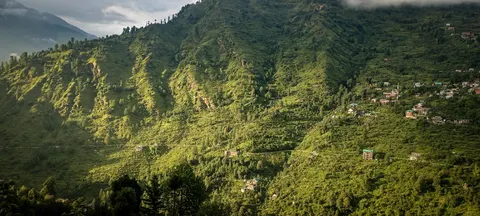
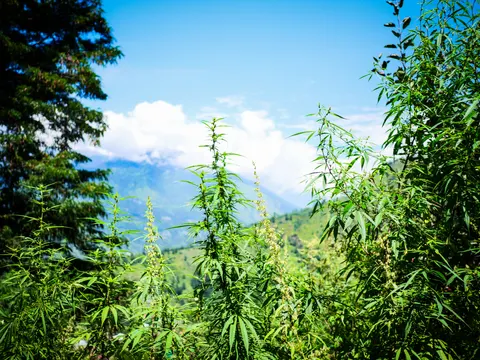
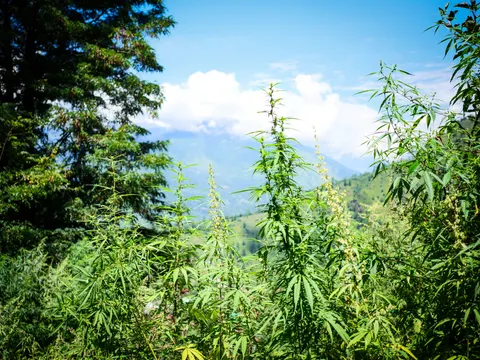
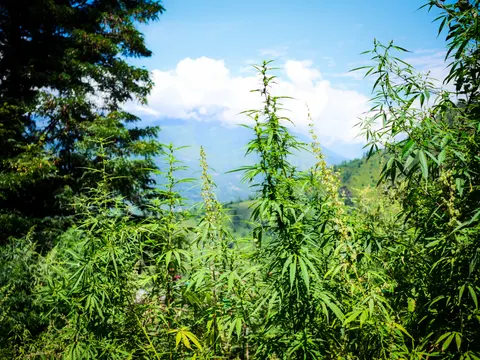
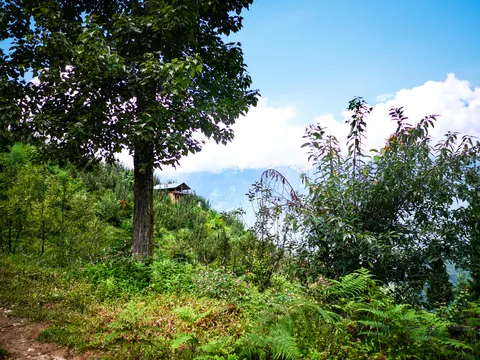
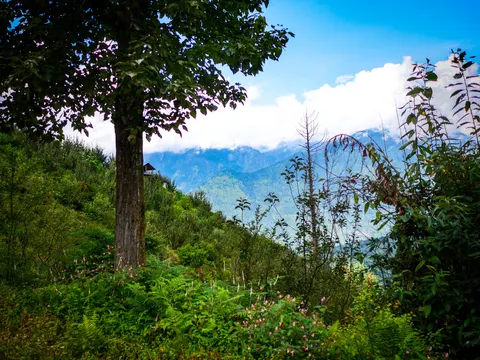
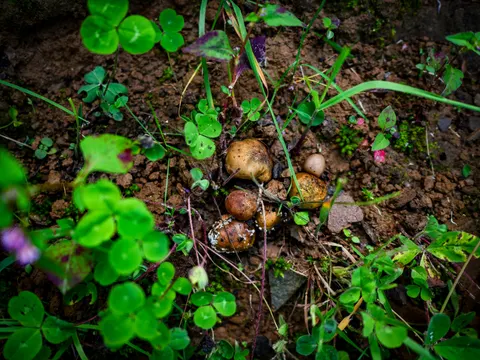
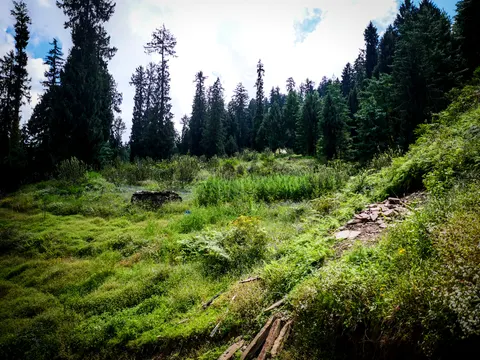
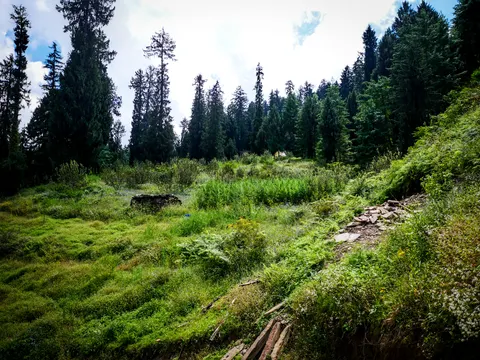
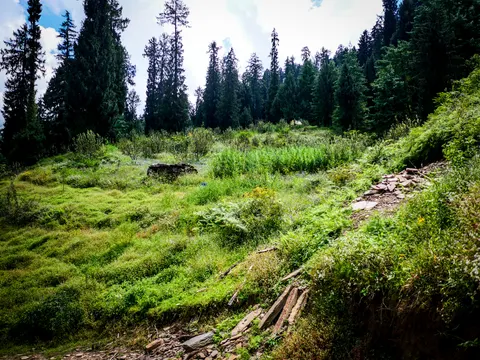
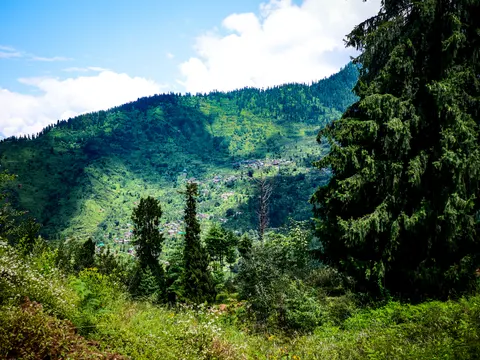
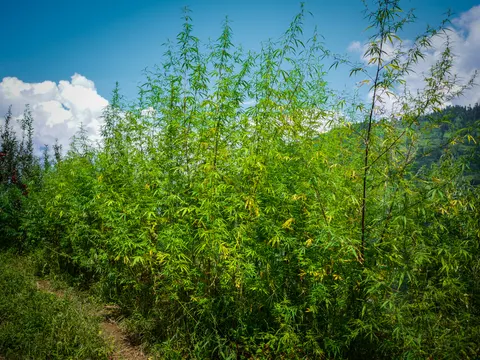
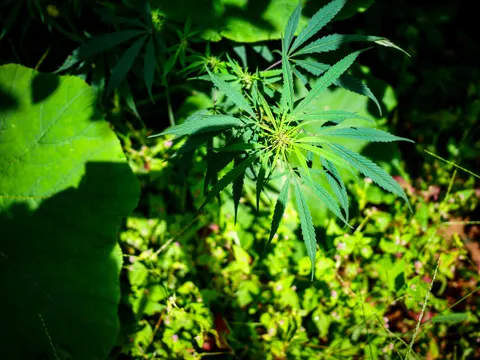
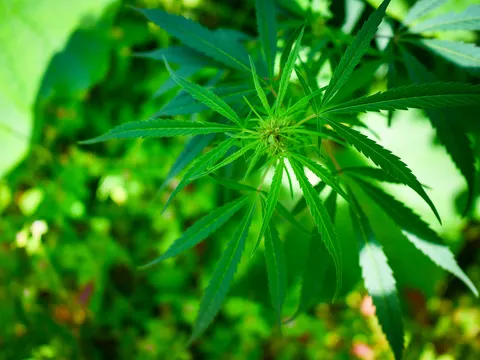
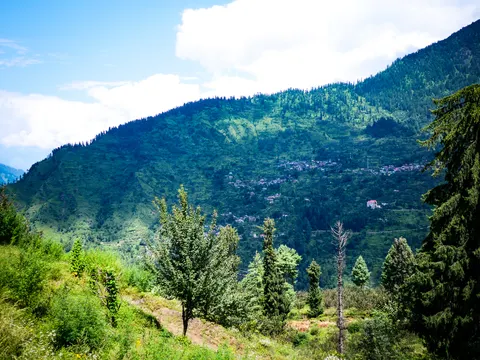
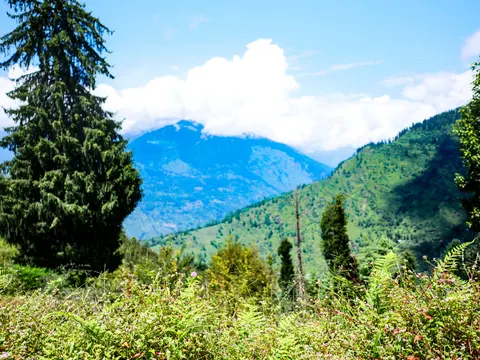
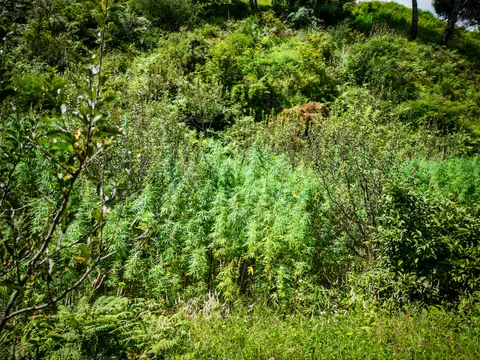
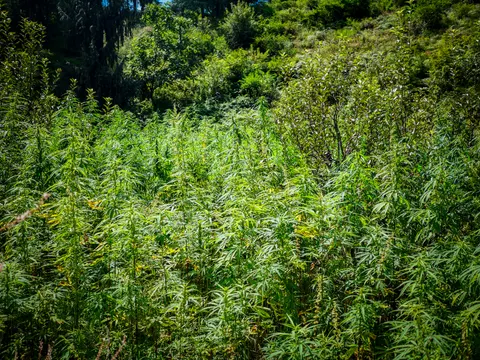
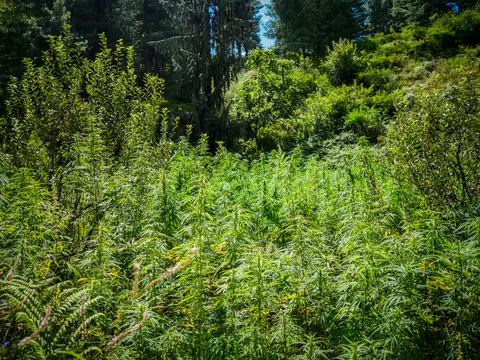
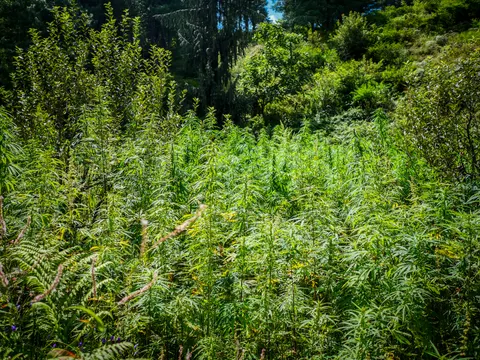
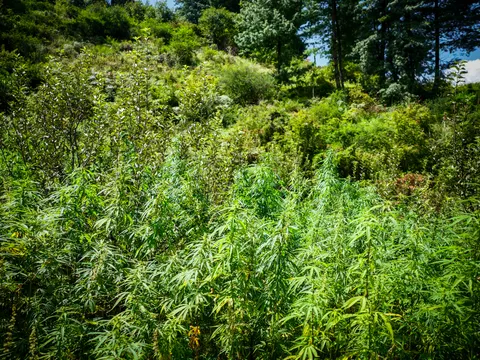
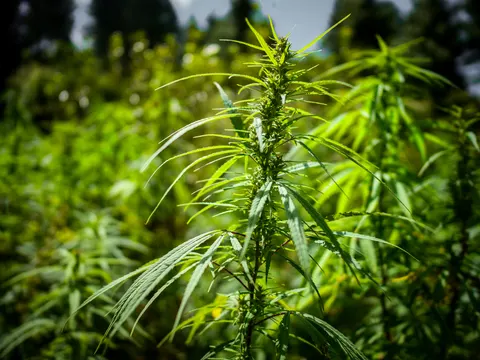
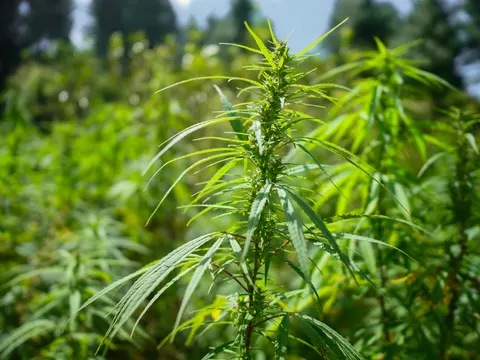
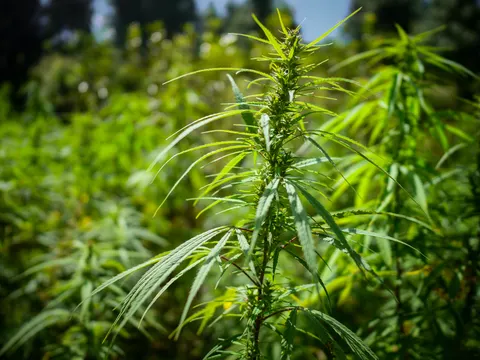
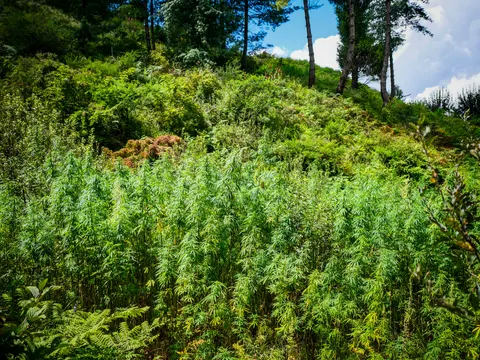
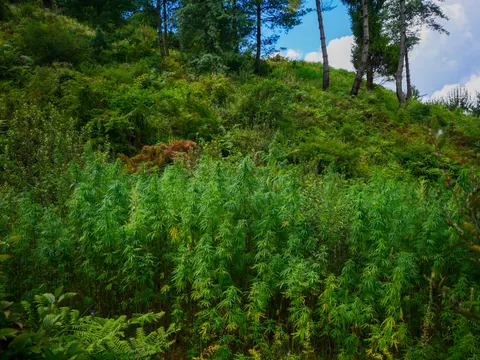
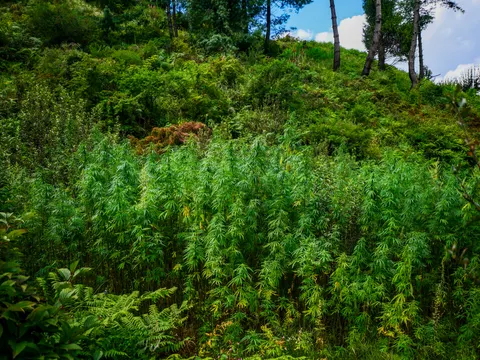
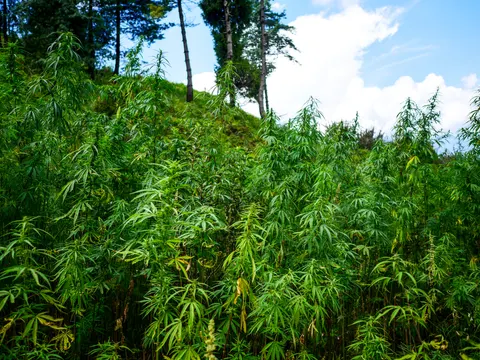
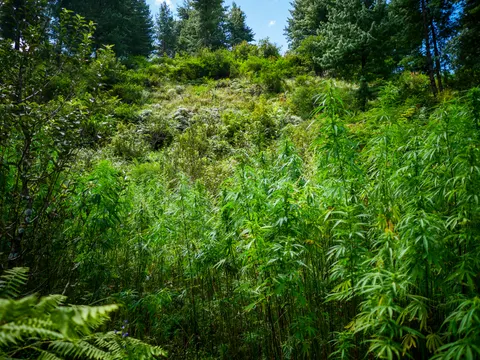
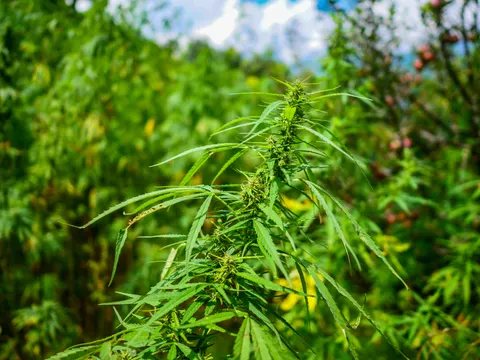
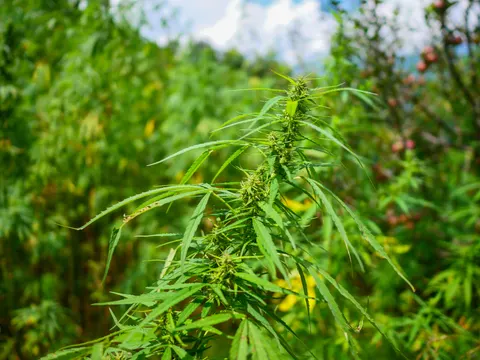
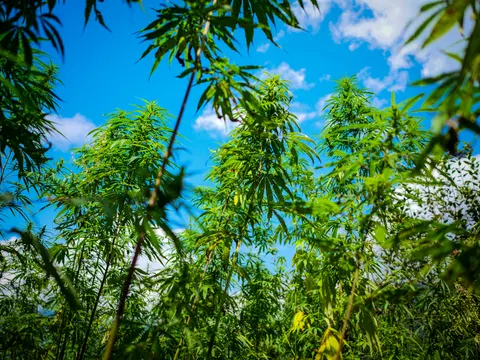
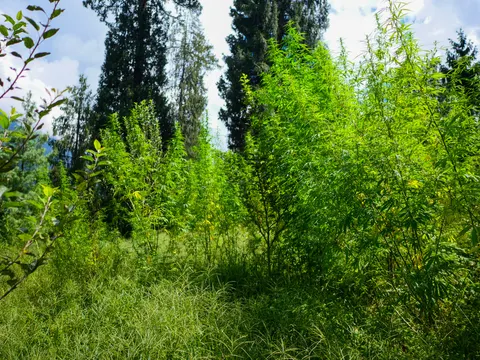
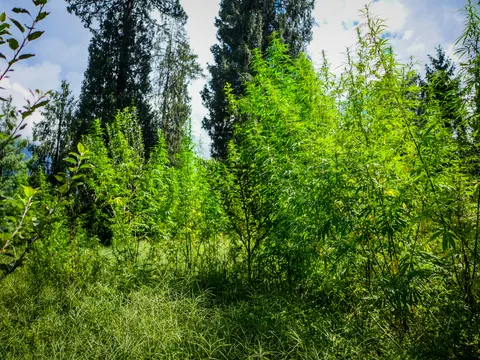
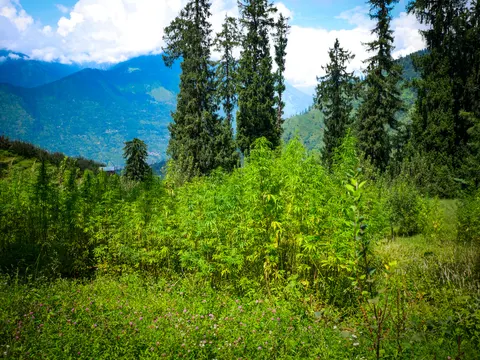
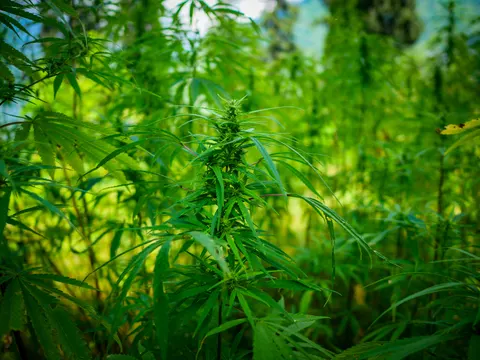
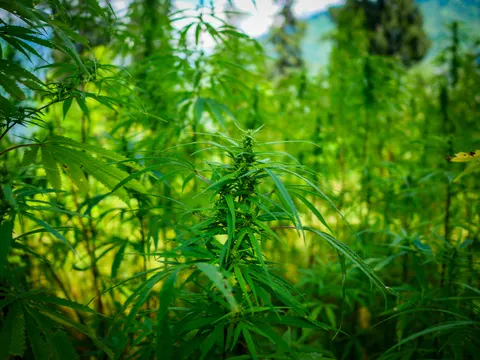
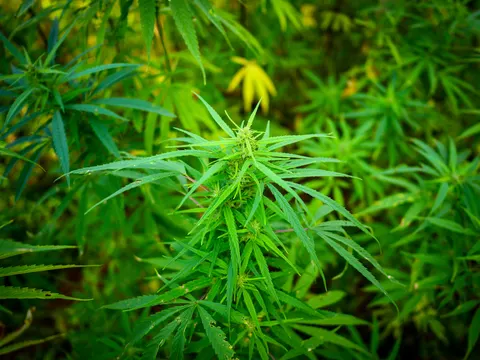
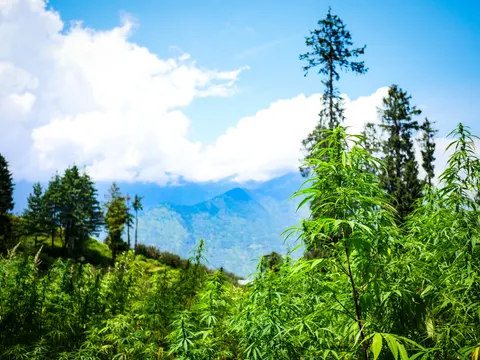
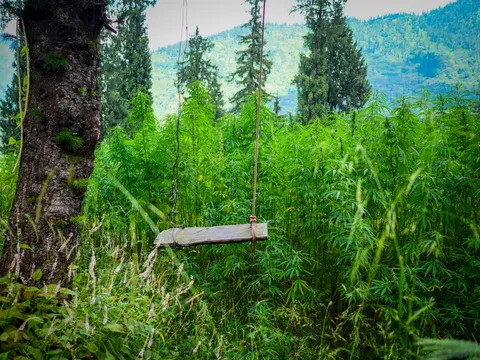
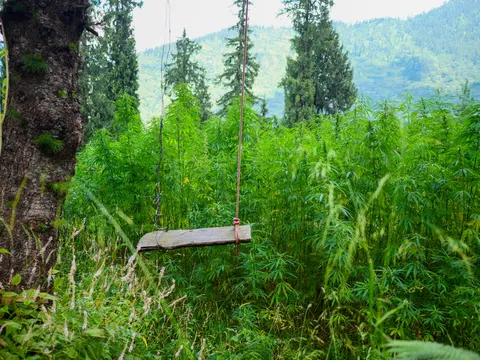
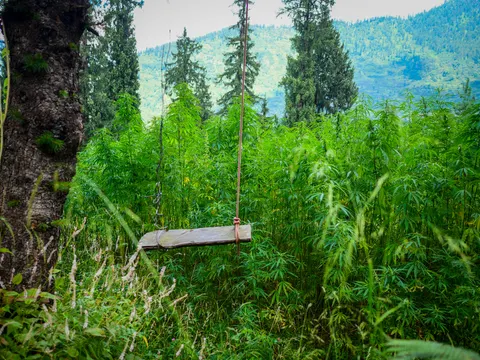
Cannabis at the edge of a settlement on the walk up from Naggar to Rumsu, 1 September 2022. A house with a green metal roof stands below and forest runs up the ridge behind.
Naggar to Rumsu · 1 September 2022
HIMA01__01000988
1 of 124
12. References
Footnotes
-
Casañas, Francesc; Simó, Joan; Casals, Joan; Prohens, Jaime (2017). “Toward an Evolved Concept of Landrace”. Frontiers in Plant Science. 8 145. doi:10.3389/fpls.2017.00145. PMC 5296298. ↩ ↩2
-
Prasad, Abhay S.; Pandey, Bindhy W.; Leimgruber, Walter; Kunwar, Ripu M. (2016). “Mountain hazard susceptibility and livelihood security in the upper catchment area of the river Beas, Kullu Valley, Himachal Pradesh, India”. Geoenvironmental Disasters. 3 (1): 3. doi:10.1186/s40677-016-0037-x. ↩
-
Directorate of Census Operations, Himachal Pradesh. Himachal Pradesh - Village Amenities (Spreadsheet (DH_2011_DCHB_Village_Release_0200.xlsx)). Census of India 2011, District Census Handbook, Kullu. Retrieved 27 September 2026. ↩ ↩2
-
Directorate of Census Operations, Himachal Pradesh (2014). District Census Handbook, Kullu: Village and Town Wise Primary Census Abstract (Report). Census of India 2011, Himachal Pradesh, Series 03, Part XII-B. Office of the Registrar General & Census Commissioner, India. ↩
-
Shibayeff, V. (July 1931). “The Institute’s Himalayan headquarters” (PDF). Journal of Urusvati Himalayan Research Institute. 1 (1). New York: Roerich Museum Press: 90–92 – via Nicholas Roerich Museum. ↩ ↩2
-
Jangra, Suman; Singh, Mohan (2011). “Analysis of rainfall and temperatures for climatic trend in Kullu valley”. MAUSAM. 62 (1): 77–84. doi:10.54302/mausam.v62i1.207. ↩ ↩2
-
“Manali” (PDF). Himachal Pradesh Extreme Weather Atlas (Climatological table, 1971–2000). Met Centre Shimla, India Meteorological Department. Retrieved 29 September 2026. ↩ ↩2
-
Pai, D. S.; Bandgar, Arti; Devi, Sunitha; Musale, Madhuri; Badwaik, M. R.; Kundale, A. P.; Gadgil, Sulochana; Mohapatra, M.; Rajeevan, M. (15 May 2020). New Normal Dates of Onset/Progress and Withdrawal of Southwest Monsoon over India (PDF) (Report). CRS Research Report. Pune: India Meteorological Department. RR No. 3/2020. ↩
-
Poggio, Laura; de Sousa, Luis M.; Batjes, Niels H.; Heuvelink, Gerard B. M.; Kempen, Bas; Ribeiro, Eloi; Rossiter, David (2021). “SoilGrids 2.0: producing soil information for the globe with quantified spatial uncertainty”. SOIL. 7 (1): 217–240. doi:10.5194/soil-7-217-2021. ↩
-
“SoilGrids250m 2.0”. ISRIC – World Soil Information. Retrieved 29 September 2026. ↩
-
Sharma, Priyanka; Singh, Mohinder; Bhardwaj, S. K. (2019). “Effect of Management Practices on Soil Nutrient Status of Apple Orchards in Kullu District of Himachal Pradesh”. International Journal of Economic Plants. 6 (4): 150–155. ↩
-
Wani, Firdous Ahmad; Songara, Manoj (November 2018). “Status and position of apple crop in area, production and productivity in Himachal Pradesh”. International Journal of Multidisciplinary Research and Development. 5 (11): 106–111. ↩ ↩2
-
Sen, Vijayshri; Rana, Ranbir S.; Chauhan, R. C.; Aditya (March 2015). “Impact of climate variability on apple production and diversity in Kullu valley, Himachal Pradesh”. Indian Journal of Horticulture. 72 (1): 14–20. doi:10.5958/0974-0112.2015.00003.1. ↩
-
Sahu, Netrananda; Saini, Atul; Behera, Swadhin K.; Sayama, Takahiro; Sahu, Limonlisa; Nguyen, Van-Thanh-Van; Takara, Kaoru (2020). “Why apple orchards are shifting to the higher altitudes of the Himalayas?”. PLOS ONE. 15 (7) e0235041. doi:10.1371/journal.pone.0235041. ↩
-
Harcourt, A. F. P. (1871). The Himalayan Districts of Kooloo, Lahoul, and Spiti. London: W. H. Allen & Co. – via Internet Archive. ↩
-
Lyall, J. B. (1874). Report of the Land Revenue Settlement of the Kangra District, Panjab, 1865–72. Lahore: Central Jail Press – via Internet Archive. ↩
-
Diack, A.H. (1899). Gazetteer of the Kangra District, Parts II to IV: Kulu, Lahul and Spiti, 1897. Lahore: Punjab Government – via Internet Archive. ↩
-
Indian Hemp Drugs Commission (1894). Report of the Indian Hemp Drugs Commission, 1893–94, Vol. I: Report. Simla: Government Central Printing Office. ch. IV, “Extent of cultivation, and its tendency to increase or decrease”, paras. 111 and 114, pp. 42–43 – via Internet Archive. ↩
-
Indian Hemp Drugs Commission (1894). Report of the Indian Hemp Drugs Commission, 1893–94, Vol. V: Evidence of witnesses from North-Western Provinces and Oudh and Punjab. Calcutta: Office of the Superintendent of Government Printing, India. Punjab witness no. 10, Mr. Alexander Anderson, pp. 377–380 – via Internet Archive. ↩
-
“Malana Power Company Limited”. LNJ Bhilwara Group. Retrieved 27 September 2026. ↩
-
“Award of Excellence: Malana hydroelectric complex, India”. Canadian Consulting Engineer. 1 November 2004. ↩
-
Thakur, Navdeep; Savitri; Bhalla, Tek Chand (July 2004). “Characterization of some traditional fermented foods and beverages of Himachal Pradesh”. Indian Journal of Traditional Knowledge. 3 (3): 325–335. ↩
-
Thakur, Smriti; Jamwal, Radhika; Negi, Subodh (2023). “Ethnobotanical survey of plants used in magico-religious practices in Kullu district of Himachal Pradesh, India”. Ethnobotany Research and Applications. 25: 1–18. doi:10.32859/era.25.39.1-18. ↩ ↩2
-
Bhardwaj, Arvind; Rani, Savita; Rana, J.C. (June 2014). “Traditionally used common fibre plants in outer siraj area, Himachal Pradesh”. Indian Journal of Natural Products and Resources. 5 (2): 190–194. ↩
-
“Digitised sheet 1414431: Koelz 1665”. Virtual Herbarium image service. New York Botanical Garden. Retrieved 16 September 2026. ↩
-
Tribhuvan, Prasenjeet (2018). “Cannabis and Social Change in the Indian Himalayas”. Journal of Ethnobiology. 38 (4): 504–516. doi:10.2993/0278-0771-38.4.504. ↩ ↩2

Cite this report
Cite as ZomiaFR HIMA01/kullu-valley
Éloïse (2026). Kullu Valley. Zomia Collective. ZomiaFR HIMA01/kullu-valley. Version 2.22. https://www.zomiacollective.com/expeditions/hima01/kullu-valley
The wikitext landrace.wiki cites this with:
{{cite report |author=Éloïse |date=2026-08-31 |title=Kullu Valley |publisher=Zomia Collective |url=https://www.zomiacollective.com/expeditions/hima01/kullu-valley |version=2.22 |id=ZomiaFR HIMA01/kullu-valley}}